

Where Is the Wellbeing & Wellness Sector Headed?
The world is undergoing rapid socio-cultural and socio-economic transformation, perhaps with a momentum never before experienced in human history.
Social media has enabled individuals to share information without waiting for institutional approval. As a result, access to information—whether accurate, incomplete or misleading—has reached an unprecedented level.
AI-based applications and search technologies have accelerated this change even further, reshaping how people seek knowledge, manage their health and make everyday choices.
The Growing Search for a Better Life
These developments point to a growing desire to research, experiment, learn and seek meaning in order to live and feel better.
This is precisely where wellbeing and wellness emerge as two of the world’s fastest-growing areas of interest and investment.
Although the two terms are frequently used interchangeably, they do not describe exactly the same thing.
What Is Wellbeing?
Wellbeing is a comprehensive concept describing an individual’s overall quality of life, inner balance and satisfaction.
It includes physical, mental, emotional, social and environmental dimensions.
It is also closely connected with how people experience their work, finances, relationships, sense of purpose and wider living environment.
What Is Wellness?
Wellness is a more practice-oriented field operating beneath the broader umbrella of wellbeing.
It commonly includes exercise, nutrition, spa experiences, body care and lifestyle practices intended to support physical health.
In recent years, mental wellness, emotional balance, clarity and stress management have also become central parts of the wellness conversation.
Wellness is practice-oriented; wellbeing describes a broader balance of life.
Wellness often focuses on practices that support physical and mental health. Wellbeing considers whether a person can establish sustainable balance, meaning and satisfaction across the principal areas of life.
Eight Major Areas Shaping Wellbeing and Wellness
Quality Sleep
Functional Nutrition
Exercise and Fitness
Weight Management
Beauty
Stress Management
Mental and Emotional Balance
Longevity & Wellaging
How Are Global Wellness Products and Services Classified?
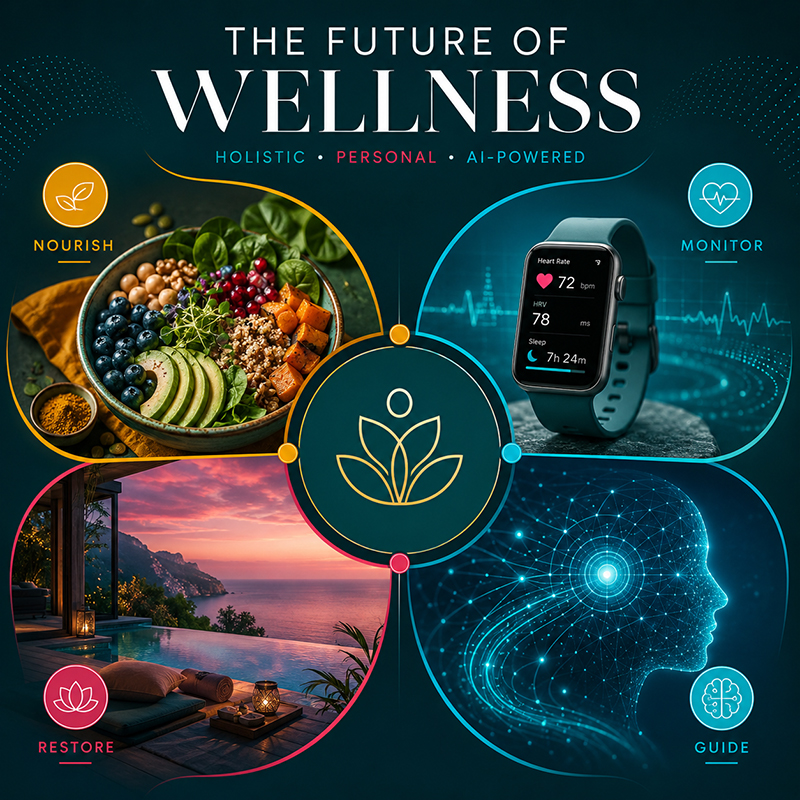
Products and services offered across the wellbeing and wellness market can broadly be grouped into four areas.
Food and Nutritional Support
Plant-based, animal-derived and functional products intended for internal or external use.
Biohacking and Personal Technology
Wearable devices, measurement tools, tracking systems and personalised health technologies.
Wellness Tourism
Travel experiences centred on health, renewal, spa treatments, retreats and holistic living.
AI-Based Applications
General and personalised applications supporting healthy living, awareness and daily guidance.
Why Is the Wellness Economy Growing So Rapidly?
The 2024 Global Wellness Economy Monitor reported that the global wellness economy reached approximately 6.3 trillion US dollars in 2023 and projected that it could approach 9 trillion dollars by 2028.
Research into the future of wellness also highlights strong consumer interest in health, sleep, nutrition, fitness, beauty and mindfulness.
The emerging consumer behaviour is clear: health is no longer treated as an occasional purchase or activity. It is becoming a personalised, daily and sustainable practice.
Younger consumers are helping drive this transformation. Millennials and Generation Z increasingly see health not merely as the absence of illness, but as the ability to feel better, think more clearly and live more consciously.
Appearance remains important, especially among younger consumers, while mindfulness, meditation, breathing practices and conscious lifestyle choices are becoming increasingly integrated into everyday routines.
Can Technology Support a Healthier and More Conscious Life?
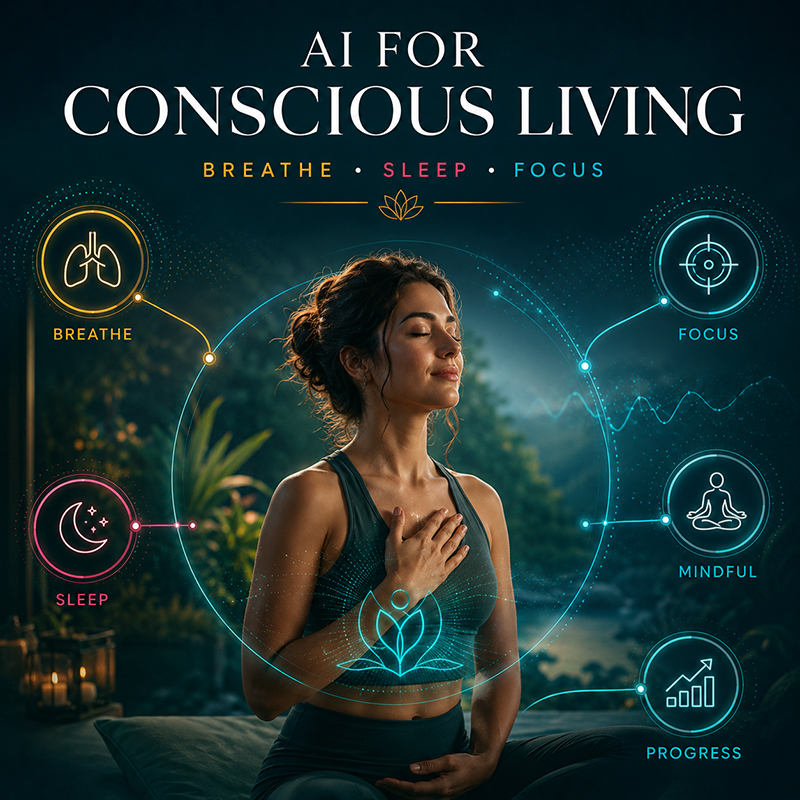
Artificial intelligence has rapidly entered physical healthcare, mental wellbeing, personalised care, stress management, sleep support and healthy-living education.
AI-based systems can help track health indicators, identify behavioural patterns and provide reminders or personalised suggestions.
They may also guide users towards breathing exercises, meditation practices or educational resources according to their recorded habits and real-time needs.
Areas Where Artificial Intelligence May Offer Support
Physical Health
Personalised healthcare, biometric tracking, longevity and preventive health approaches.
Mental Wellbeing
Stress management, sleep support, emotional awareness and access to psychological resources.
Education and Guidance
Digital health coaching, personalised suggestions, reminders and healthy-living education.
AI Can Offer Support, but Transformation Is Personal
The use of artificial intelligence as a health or wellbeing coach reflects the growing demand for support that is accessible and adapted to individual needs.
Consumers must nevertheless remain conscious, selective and sensible.
Technology can provide reminders, observations and personalised suggestions. True transformation, however, develops through the relationship a person creates with their own body, mind, values and inner guidance.
We are not machines. We are complex, multidimensional human beings. The wisdom of healthy living is found not only in data, but also in inner awareness.
Technology Must Be Supported by Holistic Health Knowledge
In projects where I have been invited to consult on personal development and holistic health applications, I have sometimes observed that the entire concept was constructed incorrectly.
A technically advanced application may still offer incomplete or misleading guidance when its creators do not understand holistic health, human behaviour or the boundaries of professional expertise.
This is why the identity of the developers, the purpose of the application and the expertise behind its content matter as much as the technology itself.
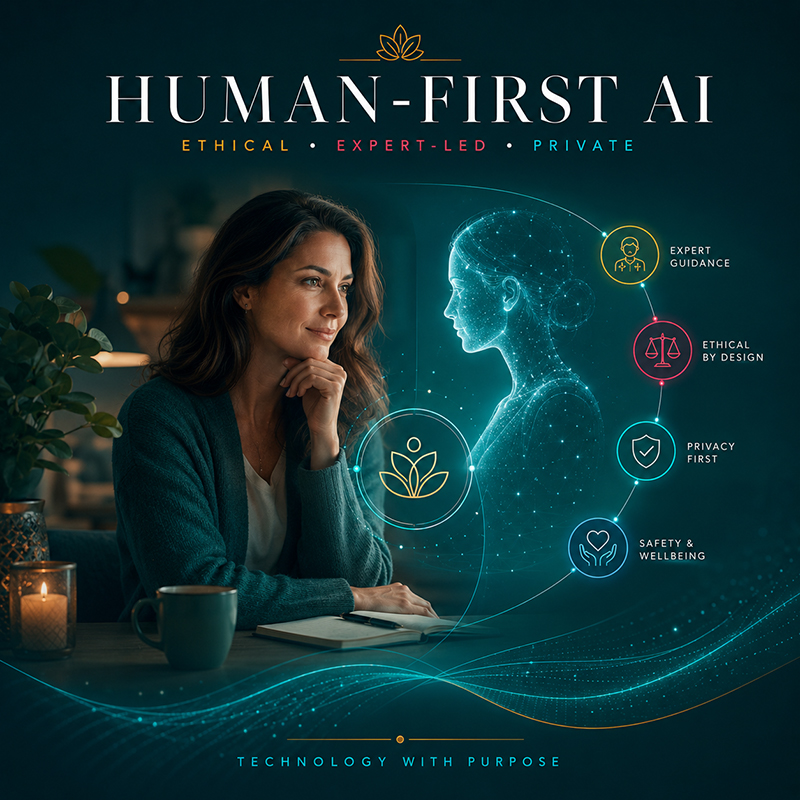
What Should We Look for in an AI-Based Health Application?
Technological progress can offer valuable support, but applications should be evaluated according to their ethics, transparency, expertise and respect for the user.
Ethics and Trust
Consider why the application was created, how it uses personal data and whether its guidance system is transparent.
Qualified Expert Content
Check whether the recommendations and educational content were designed with reputable subject-matter experts.
Privacy and Data Protection
Understand which personal and biometric information is collected, stored or shared.
Clear Professional Boundaries
Trustworthy applications explain when their support is insufficient and professional medical or psychological care is required.
Technology May Guide Us, but the Human Being Must Remain at the Centre
As artificial intelligence continues to evolve, wellbeing and wellness applications will expand and offer new ways to support holistic health.
We should remain informed about these developments and benefit from them in ways that are compatible with our values and needs.
At the same time, meditation, conscious breathing practices and other forms of self-awareness help people strengthen their own inner guidance mechanisms.
Our task, as the world continues to change, is to care for our bodies and minds and take safe, conscious and sustainable steps on our continuing journey of discovery.
Ebru Şinik
Wellbeing Coach, Ayurveda Instructor,
Holistic Health Author &
Chairwoman of the Wellbeing Association
The Future of Wellbeing, Wellness and Artificial Intelligence
What is the main difference between wellbeing and wellness?
Wellness generally focuses on practices such as exercise, nutrition, sleep, spa treatments and stress management. Wellbeing is a broader approach incorporating physical, mental, emotional, social, professional and environmental balance.
Why is the wellness economy growing?
Consumers increasingly see healthy living as a daily and personalised priority. Demand is growing across sleep, nutrition, fitness, beauty, mental wellness, longevity and digital health solutions.
How can AI support healthy living?
AI can analyse sleep, movement, stress and behavioural data and provide personalised reminders, educational resources or lifestyle suggestions.
Can an AI health application replace professional care?
No. AI can be a supportive tool, but it cannot replace qualified medical or psychological evaluation, diagnosis and treatment.
Is wellbeing limited to physical health?
No. Wellbeing also includes mental and emotional balance, relationships, purpose, work, financial security and the relationship with one’s environment.
Where do longevity and wellaging fit into wellbeing?
Longevity focuses on extending healthy lifespan, while wellaging focuses on experiencing ageing with greater physical, mental and emotional resilience.
What should I examine before using an AI wellbeing application?
Review its privacy policy, professional expertise, evidence base, transparency and whether it clearly explains the limits of its recommendations.
Wellbeing Note
Digital wellbeing and health applications may support education, awareness and healthy routines.
They do not replace medical or psychological care. Qualified professional support should be sought for persistent symptoms, health concerns or decisions requiring diagnosis and treatment.