

Bhramari Breathing for Stress, Anxiety and Sleep Support
Bhramari, also known as Humming Bee Breath, is a gentle pranayama technique in which exhalation is accompanied by a soft, continuous humming sound.
The vibration and extended exhalation may help quiet mental activity, support nervous system regulation and create a calmer transition towards rest and sleep.
Bhramari brings attention away from external stimulation and towards the vibration of the breath, creating a simple space for pausing, listening and settling the mind.
Breathing Practice Is Not a Replacement for Treatment
Depression, anxiety disorders and chronic insomnia are health conditions that may require psychological, psychiatric or medical evaluation.
Bhramari may be included as a supportive wellbeing practice, but it should not be presented as a treatment or replacement for professional care.
Seek qualified support when sadness, anxiety, fear, hopelessness or sleep problems are persistent, severe or significantly affecting daily life.
Review the Instructions Before You Begin
Before practising any pranayama exercise described in Ebru Şinik’s breathing guide, read the specific application principles and contraindications carefully.
Watching the demonstration video before your first practice can help you understand the humming sound, posture, hand position and appropriate volume.
The sound should feel gentle and soothing. It should never create pressure, pain, irritation or strain in the ears, throat, head or chest.
What Is Bhramari Breathing?
The Sanskrit word Bhramari refers to a bee. The technique takes its name from the soft humming sound produced during exhalation.
The breath is inhaled gently through the nose. During a slow nasal exhalation, the mouth remains closed while a smooth “hmmm” vibration is created.
The purpose is not to produce the loudest possible sound. The vibration should remain steady, comfortable and pleasant throughout the exhalation.
Listening to the Vibration Within
Ebru Şinik also describes Bhramari as Unity Consciousness Breathing because the humming vibration is experienced not only as a sound, but also as a sensation within the head, chest and body.
Directing attention towards this inner vibration may help reduce external distraction and deepen present-moment awareness.
This traditional description reflects the experiential and meditative dimension of the practice. It should not be interpreted as a scientific or medical claim.
Which Breathing Technique Should You Choose?
Different breathing techniques serve different needs. For evening restlessness and difficulty settling before sleep, Ebru Şinik primarily recommends the gentle rhythm of Anuloma Viloma.
You can review that technique in the Alternate Nostril Breathing article .
Bhramari or Ujjayi may also be added to a structured morning or evening routine when the technique is appropriate for your individual needs.
Position
Sit upright and comfortably on the floor or on a firm, stable chair.
Children
Children aged seven and above should practise only with appropriate adult guidance and supervision.
Repetitions
Begin with 5 to 7 gentle humming breaths. Increase only when the practice remains comfortable.
Frequency
One calm daily session is sufficient within this structured practice.
What May Bhramari Support?
Individual responses vary. Existing research is encouraging but still limited, so Bhramari should be described as a supportive wellbeing practice.
Mental Calm
The slow exhalation and steady humming vibration may help reduce mental agitation and support a calmer internal state.
Nervous System Regulation
Slow humming breathing may support parasympathetic activity and the transition from alertness towards relaxation.
Preparation for Sleep
A comfortable evening practice may help quiet racing thoughts and create a calmer transition into the bedtime routine.
Emotional Balance
Focusing on sound, vibration and exhalation may provide a pause during stress, anxiety or emotional intensity.
Attention and Awareness
Following the vibration throughout each exhalation encourages sustained attention and present-moment awareness.
Voice and Resonance Awareness
Gentle humming may increase awareness of the throat, facial resonance and vibration without requiring forceful vocal effort.
What Bhramari Does Not Treat
Bhramari should not be presented as a treatment for thyroid disease, tinnitus, depression, anxiety disorders, insomnia, sinus infections or tumours of the brain, pituitary gland or another organ.
Humming may feel soothing for some people, but individual responses differ. It may feel uncomfortable for people with tinnitus, ear sensitivity or an active ear condition.
Medical symptoms and persistent psychological concerns require evaluation and treatment by appropriately qualified professionals.
When Should You Pause or Seek Guidance?
Ear Conditions
Avoid the practice during an active ear infection, significant ear pain, recent ear surgery or when humming worsens tinnitus.
Acute Chest or Cardiovascular Symptoms
Do not practise during chest pain, significant breathlessness or another acute cardiovascular symptom.
Uncontrolled Blood Pressure
People with uncontrolled high blood pressure or a significant cardiovascular diagnosis should obtain medical guidance before beginning a structured practice.
Neurological Conditions
Anyone with epilepsy, a recent seizure, recurrent fainting or another neurological condition should seek individual guidance.
Stop immediately when the vibration causes headache, ear pressure, dizziness, nausea, chest discomfort, panic or unusual shortness of breath.
Practise in a Quiet and Safe Place
Do not practise while driving, operating equipment or in another situation that requires active attention.
Avoid practising in a moving vehicle when you cannot sit securely or rest if the sound creates dizziness or discomfort.
Choose a quiet place where you can remain seated for a short time after completing the final humming breath.
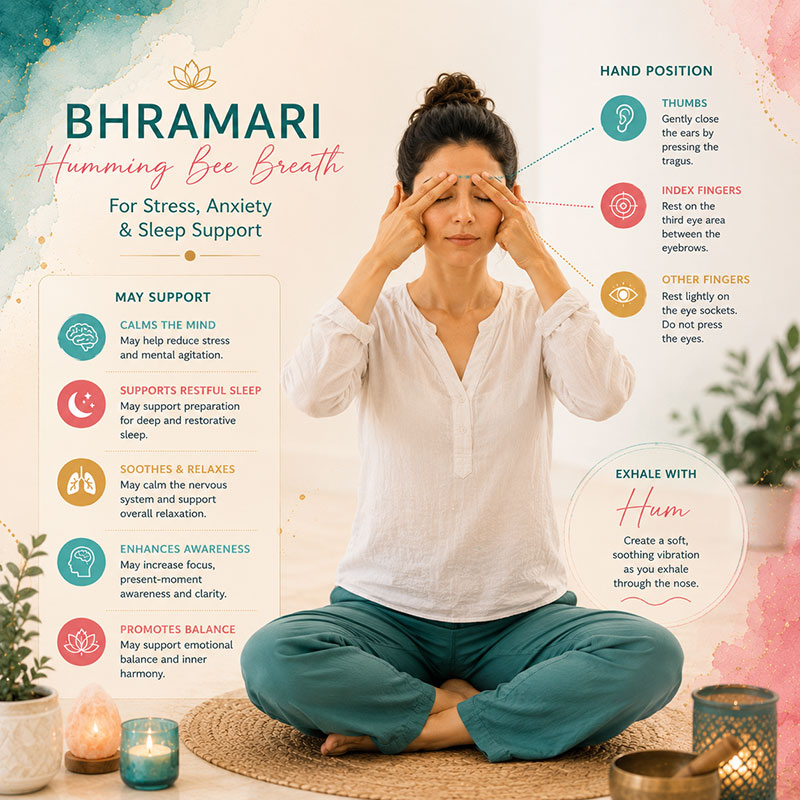
Never Press the Ears or Eyes
Bhramari can be practised with both hands resting comfortably on the knees. Closing the ears is optional rather than essential.
When using the traditional hand position, place the thumbs lightly over the tragus or at the ear opening without pushing deeply.
Fingers resting around the forehead and eye area must remain extremely light. Never apply pressure directly to the eyeballs.
How to Practise Bhramari
Begin with the simplest version. Add the hand position only when it feels comfortable and has been properly explained.
Sit Upright
Sit comfortably on the floor or on a chair. Allow the spine to rise naturally without making the body rigid.
Relax the Face
Close the eyes softly. Release tension from the forehead, jaw, throat, neck and shoulders.
Position the Tongue Comfortably
Keep the mouth gently closed and rest the tongue naturally behind the upper front teeth without pressing or tightening.
Prepare the Hands
Leave the hands on the knees or place the thumbs lightly near the ear openings. Keep all pressure away from the eyes.
Inhale Through the Nose
Take a slow and comfortable nasal breath. Do not try to fill the lungs to their maximum capacity.
Exhale with a Gentle Hum
Exhale slowly through the nose while producing a soft and continuous “hmmm” sound with the mouth closed.
Repeat Without Strain
Begin with 5 to 7 comfortable rounds. Allow each exhalation to finish naturally rather than trying to extend the humming sound beyond your capacity.
How Loud Should the Humming Be?
The sound should remain low, smooth and sustainable. Loudness is not the goal.
Feel the vibration around the lips, cheeks, nose and head without forcing the throat.
Reduce the volume or stop when the sound creates ear pressure, throat irritation, headache or agitation.
Rest in Silence After the Final Breath
After the last humming exhalation, lower the hands gently and allow the breath to return to its normal rhythm.
Keep the eyes closed and observe the remaining vibration without trying to create another sound.
Rest for a short time before opening the eyes, standing up or returning to your daily activities.
Building Your Practice Week by Week
First Week
Begin with 5 to 7 comfortable humming breaths once a day.
Gradual Increase
Add one breath in a new week only when the existing number remains relaxing and completely comfortable.
Personal Maximum
Within Ebru Şinik’s structured method, 17 breaths is the upper limit rather than a target everyone must reach.
The Traditional Meaning of Seventeen Breaths
In Ebru Şinik’s teaching method, the gradual progression may continue up to a maximum of 17 humming breaths.
The number 17 is connected with a traditional Vedic interpretation of the subtle energy body.
This is a traditional and symbolic explanation, not a medically established physiological limit. You do not need to reach 17 breaths to benefit from a calm and comfortable practice.
More repetitions do not automatically create greater benefit. A few comfortable humming breaths are more valuable than a longer practice performed with pressure or strain.
Watch the Bhramari Application Video
Watch Ebru Şinik’s complete demonstration before your first practice to observe the humming sound, hand position, breathing rhythm and resting phase.
Watch the Application VideoLife Hidden in Breath
Ebru Şinik’s book Life Hidden in Breath – Breathing Techniques for Daily Life, presented on its English cover as Health, Breath & Life, explains breathing techniques step by step.
The book includes application guidance, recommended durations, technique-specific contraindications and QR-coded instructional videos.
Review the complete guidance before selecting the breathing practices that are appropriate for your body, health history and personal wellbeing needs.
Discover the Breathing GuideBe Well, Be Happy!
Bhramari or Humming Bee Breath
What is Bhramari breathing?
Bhramari is a gentle pranayama technique in which a slow nasal exhalation is accompanied by a continuous humming sound.
Can Bhramari help with anxiety?
Its slow exhalation and focused humming may support relaxation and stress regulation. It does not replace treatment for an anxiety disorder.
Can Bhramari support better sleep?
A gentle evening practice may help quiet mental activity and support preparation for sleep. Persistent insomnia requires appropriate medical evaluation.
Does Bhramari treat depression?
No. It may be used as a supportive relaxation practice, but it does not replace psychotherapy, psychiatric care or prescribed treatment for depression.
Do I have to close my ears?
No. Beginners may practise with the hands resting on the knees. Closing the ears is an optional variation and should always be done very gently.
Should I press my eyes during the practice?
No. Never apply pressure directly to the eyeballs. Any fingers placed around the forehead or eye area should remain extremely light.
Can Bhramari cure tinnitus or thyroid disease?
No. Bhramari is not a treatment for tinnitus, thyroid dysfunction or another medical condition. Stop if the sound worsens tinnitus or creates ear pressure.
How many breaths should beginners practise?
Begin with approximately 5 to 7 comfortable humming breaths. Increase gradually only when the practice remains calming and completely free of strain.
What should I do if I feel dizzy or uncomfortable?
Stop immediately, lower the hands and return to natural breathing. Rest and do not resume the practice during the same session.
Wellbeing Note
Bhramari may support relaxation, present-moment awareness and preparation for sleep, but individual responses vary.
It does not diagnose, prevent or treat depression, anxiety disorders, insomnia, thyroid disease, tinnitus, tumours or another medical condition. Professional evaluation and treatment should not be delayed or discontinued because of a breathing practice.
Ebru Şinik
Wellbeing Coach & Ayurveda Instructor