
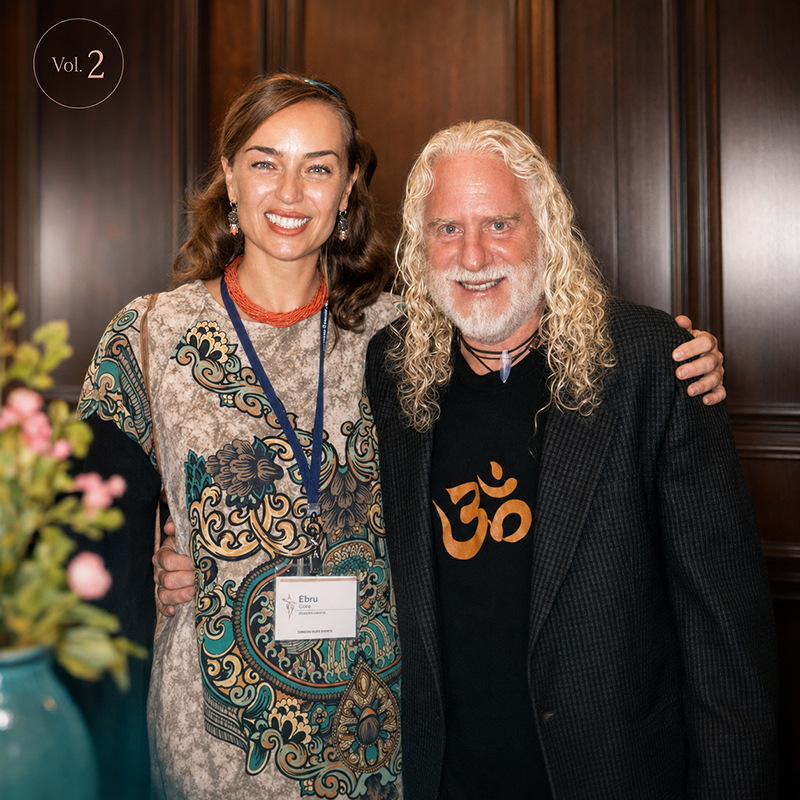
The Path to Inner Peace: Davidji Unlocks the Secrets of Meditation with Wellbeing Pioneer Ebru Şinik – Vol. 2
In Secrets of Meditation, davidji removes the mystery surrounding meditation and brings the practice into the realities of modern life.
In this second part of the conversation, he explores deeper practice, intention setting, the myths that discourage beginners and the inner silence in which new possibilities emerge.
Meditation is not about forcing the mind to become empty. It is about learning to witness what is present without immediately becoming controlled by it.
The Answers Are Not Always Outside Us
People often search outside themselves for solutions, direction, approval and inner peace.
davidji’s central message is that meditation gives us an opportunity to turn our attention inward and notice what constant activity has been covering.
The practice does not guarantee an immediate answer to every problem. It creates a quieter and more fertile inner environment in which clarity may gradually develop.
What Do You Recommend for Going Deeper in Meditation?
The key is to begin with a manageable period of silence every day.
Rather than creating an ambitious routine that quickly becomes exhausting, begin with a few minutes and allow consistency to develop.
davidji recommends gradually working towards a more established daily practice. In the interview, he suggested committing to approximately thirty minutes a day for twenty-one consecutive days.
The exact duration is less important than establishing a rhythm that can be continued without creating pressure or self-judgement.
Meditation Requires a Different Set of Tools
Many of the achievements in our lives are built through planning, effort, action and measurable progress.
Meditation does not follow exactly the same logic. It is less about accomplishing a task and more about allowing ourselves to remain present without constantly trying to improve, solve or control the moment.
Beneath professional titles, possessions, responsibilities and social identities, there is a quieter sense of being that does not need to perform.
Meditation creates an opportunity to reconnect with that inner space.
Three Questions to Explore Before Meditation
Who Am I?
Beyond roles and expectations, what feels most authentic and essential?
What Do I Want?
What do I genuinely long to create, experience or contribute?
What Is My Purpose?
Which direction allows my values, abilities and contribution to meet?
Do Not Force the Answers During Meditation
These questions can be explored briefly before meditation, but davidji advises against carrying them into the practice as problems that must be solved.
Meditation prepares the inner ground. The practical value often becomes visible later, when we return to daily life with greater creativity, perspective and awareness.
The insight may appear not while the eyes are closed, but when we are working, speaking, making a decision or relating to another person.
What Does the “Field of Infinite Possibilities” Mean?
davidji uses the expression field of infinite possibilities to describe an inner state in which habitual limitations temporarily loosen.
Meditation may help us notice fear-based assumptions, repetitive narratives and beliefs that have narrowed our perception of what is possible.
When we return to ordinary life, that pause may allow a fresher response to appear rather than repeating the same automatic reaction.
In this sense, meditation does not magically create unlimited outcomes. It may help us recognise choices, perspectives and solutions that we had previously overlooked.
The space created by meditation can help the next thought arrive with greater freshness, openness and possibility.
Which Misconceptions Prevent People from Meditating?
One of the most common reasons people abandon meditation is the belief that they are doing it incorrectly. davidji identifies five myths that create unnecessary pressure.
Myth 1: The Mind Must Be Completely Empty
Thoughts are a normal part of meditation. The practice is to notice them and gently return to the chosen focus.
Myth 2: Something Special Must Happen
Calm, joy or unusual sensations may arise, but meditation is not successful only when it produces an extraordinary experience.
Myth 3: There Is Only One Correct Method
Different practices may suit different people. Excessive concern about performing perfectly can become another source of tension.
Myth 4: Long Practice Makes You Superior
Meditation does not create a hierarchy in which one person becomes more valuable than another.
Myth 5: Meditation Proves Spiritual Achievement
Meditation is a practice of awareness, not a status symbol. Its value is reflected in how we treat ourselves and others.
Having Thoughts Does Not Mean You Cannot Meditate
The mind naturally produces thoughts, memories, plans, images and emotional reactions.
Meditation does not require this activity to disappear completely.
Each moment of recognising that attention has wandered and gently returning is itself part of the practice.
Why Is Setting an Intention Before Meditation Important?
Intention setting gives us an opportunity to recognise the themes, relationships and decisions that currently matter most in our lives.
Before meditation, write down the questions that feel important to you and reflect on them briefly over several days.
Some questions may produce an immediate answer. Others may remain open.
Once the intention has been acknowledged, release it before beginning the meditation. Do not spend the entire practice analysing the question or demanding a solution.
The purpose is to plant a seed in awareness and then allow daily life to reveal how it develops.
A Practical Intention-Setting Ritual
Write
Put the question or intention into clear and simple words.
Explore
Reflect briefly on why the question matters to you.
Release
Let go of the demand for an immediate answer.
Observe
Notice what becomes clearer in the days that follow.

Supporting People Under Pressure
During the original interview, davidji described working with people from entertainment, sport, business and public life.
He explained that many people seek meditation not because their lives are easy, but because success does not automatically protect anyone from anxiety, uncertainty, grief or emotional pressure.
The names and examples mentioned in the interview reflect davidji’s personal account at that time and are not presented here as independently verified endorsements.
Have You Taught Meditation to Public Figures?
davidji explained that he had introduced meditation and stillness practices to actors, athletes, business leaders and other people living under significant public pressure.
He shared that some arrived during difficult periods in their personal or professional lives.
He also referred to conversations and teaching experiences involving political and entertainment figures.
The essential point of his answer was not celebrity, but the fact that people at every level of society experience fear, stress, uncertainty and the need for inner steadiness.
What Message Would You Like to Share with Readers in Türkiye?
“Meditating every day can help you lean more deeply in the direction of your dreams and move away from what no longer serves you.”
davidji
davidji expressed his affection for Türkiye and his appreciation for people seeking greater awareness, balance and growth.
He emphasised that meditation is not a single achievement, but a lifelong process.
Through regular practice, we may begin to recognise when our words create conflict rather than harmony, when our thoughts no longer support us and when an old pattern is guiding our behaviour automatically.
In his words, meditation awakens the silent witness within us—the part that can observe an experience before choosing how to respond.
The silent witness does not prevent every difficult thought or emotion. It gives us a moment of awareness in which a more conscious response becomes possible.
Four Ideas That Complete the Interview
Begin Small and Continue
A sustainable daily rhythm is more useful than forcing an advanced practice too soon.
Thoughts Are Part of Meditation
The mind does not need to become completely empty for the practice to be meaningful.
Intention Is Not Control
Set the direction, then release the demand for a specific or immediate outcome.
Awareness Changes Daily Life
The value of meditation becomes visible in speech, relationships, decisions and everyday reactions.
Read the davidji Interview – Vol. 1
Return to the first part of Ebru Şinik’s conversation with davidji on inner silence, daily practice and the meaning of meditation.
Read Vol. 1The End of the davidji Meditation Interview Series
The two-part conversation reminds us that meditation does not remove us from real life. It changes the awareness with which we enter it.
Be Well, Be Happy!
Deeper Meditation, Intention and Inner Peace
How can I go deeper in meditation?
Begin with a manageable daily practice, keep the time reasonably consistent and increase the duration gradually without forcing yourself.
Do I need to meditate for thirty minutes every day?
No. Thirty minutes was davidji’s longer-term recommendation in the interview. Beginners may start with five or ten minutes.
What is the field of infinite possibilities?
It is a spiritual and metaphorical expression for the greater sense of openness that may appear when limiting beliefs and habitual reactions temporarily loosen.
Must I clear all thoughts from my mind?
No. Thoughts are normal. Meditation involves noticing them and gently returning attention to the breath, mantra or another chosen focus.
Is there a right and wrong way to meditate?
There are many valid approaches. The practice should be safe, appropriate for the individual and sustainable.
What is intention setting?
Intention setting means identifying a meaningful direction or question before meditation and then releasing the need to solve it during the practice.
Should I analyse my problems while meditating?
Usually, no. Reflect briefly beforehand, then allow the meditation itself to remain a practice of attention and awareness.
Does meditation make someone spiritually superior?
No. Meditation does not establish a hierarchy. Its value is better assessed through awareness, compassion and behaviour in daily life.
Can meditation solve every emotional problem?
No. Meditation may support awareness and emotional regulation, but it does not replace appropriate psychological or medical care.
Wellbeing Note
Meditation may support attention, relaxation, self-awareness and stress regulation, but experiences vary from person to person.
Some people may experience anxiety, difficult memories, dissociation or emotional discomfort during intensive or prolonged meditation.
Meditation does not diagnose or treat a medical or psychological condition. Qualified professional support should be sought when symptoms are persistent, severe or significantly affect daily functioning.
Ebru Şinik
Wellbeing Coach & Ayurveda Instructor,
Holistic Health Author