


Life Hidden in the Breath
A Guide to Nasal Breathing Exercises
Written by Ebru Şinik, Wellbeing Coach, Ayurveda Instructor, Holistic Health Author & Chairwoman of the Wellbeing Association , Life Hidden in the Breath is a practical guide to conscious nasal breathing and its place in everyday wellbeing.
First published in Turkish in 2016 under the title Nefeste Saklı Hayat, the book brings together traditional pranayama knowledge, Ayurvedic principles and modern perspectives on the relationship between breath, the nervous system and the mind–body connection.
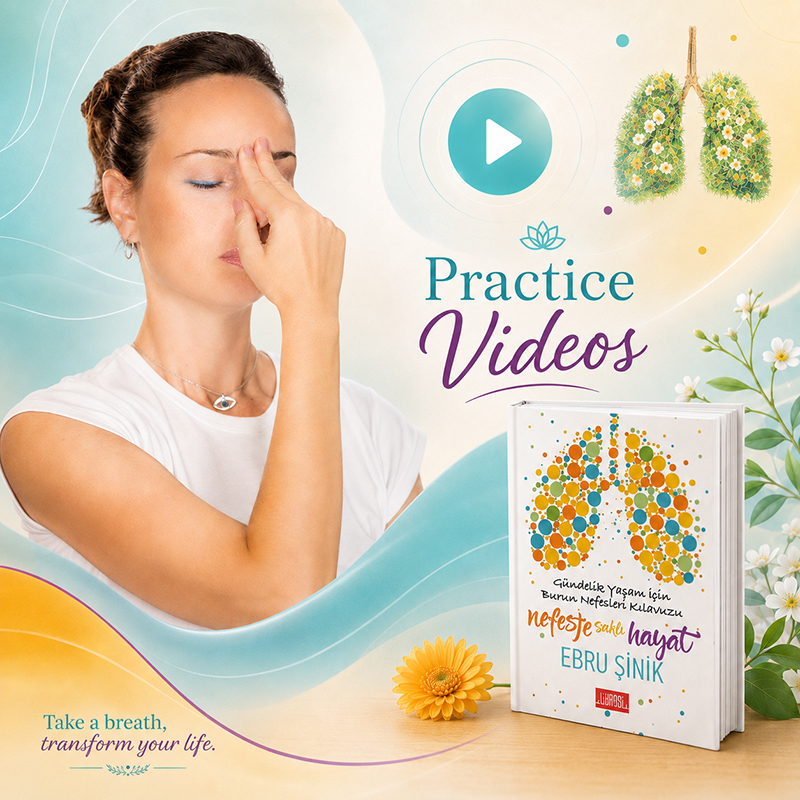
Through accessible explanations, illustrated techniques and QR-coded practice videos, the book invites readers to develop a safer, more conscious and sustainable relationship with their breath.
A Guide to Nasal Breathing for Everyday Life
Life Hidden in the Breath approaches breathing as more than a mechanical function. It presents the breath as a practical bridge between physical processes, mental activity and emotional experience.
Our breathing pattern often changes with our mood, energy level and stress response. A calm and quiet breath may accompany a calmer mind, while rapid and shallow breathing may reflect physical or emotional tension.
The book introduces controlled and rhythmic nasal breathing practices that can be selected according to different needs throughout the day. These techniques are intended to support calmness, balance, awareness and vitality when practised correctly and consistently.
“Not in a single breath, but in every breath, there is wellbeing.”
What Makes This Book Different?
Nasal breathing at its centre
The book explains why the nose is the body’s natural organ for breathing and explores how nasal breathing differs from habitual, uncontrolled mouth breathing.
A mind–body perspective
Breathing practices are presented in relation to stress response, autonomic nervous system regulation, mental clarity and overall wellbeing.
QR-coded video guidance
Dedicated QR codes allow readers to open demonstration videos on their phones and observe the breathing techniques step by step.
A strong focus on safety
Recommended durations, positions, precautions and contraindications are explained to help readers develop a safer and more informed practice.
Breathing Exercises with Video Guidance
Breath and mind reflect one another. When the breath becomes calmer and quieter, the mind may also begin to settle.
Life Hidden in the Breath was one of the pioneering breathing books published in Türkiye to combine written guidance, illustrations and video-supported practice.
Each breathing technique is explained visually and supported by a dedicated QR code. By scanning the code, readers can watch Ebru Şinik demonstrate the relevant practice and review the movement, rhythm and position involved.
This blended format makes the book particularly accessible to readers who are new to pranayama and prefer to combine written instruction with visual demonstration.
The Power of Breath: Ancient Knowledge and Modern Perspectives
While preparing the book, Ebru Şinik drew upon Ayurvedic teachings, including the work of Dr Vasant Lad, alongside research and clinical perspectives from Western mind–body medicine.
The result is a practical synthesis in which traditional breathing techniques are examined through concepts such as autonomic nervous system activity, stress regulation, cardiovascular physiology and psychoneuroimmunology.
These practices are not presented as a belief system. They are introduced as repeatable techniques that may influence breathing patterns, attention, physiological arousal and the way individuals respond to stress.
Why Should We Breathe Through the Nose?
The nose filters, warms and humidifies inhaled air before it reaches the lungs. Nasal breathing also plays a role in nitric oxide availability, airflow regulation and more efficient use of the diaphragm.
Filtering inhaled air
Nasal passages help filter particles, allergens and microorganisms before air reaches the lower respiratory system.
Warming and humidifying
The nose prepares inhaled air by warming and humidifying it before it reaches the lungs.
Supporting balanced breathing
Nasal breathing naturally creates greater airflow resistance than mouth breathing, which may encourage a slower and more regulated breathing rhythm.
Encouraging diaphragmatic movement
A more conscious nasal breathing pattern may support better engagement of the diaphragm and greater awareness of the breath.
Nitric oxide and circulation
Nitric oxide produced within the nasal passages is involved in vascular function and several physiological signalling processes.
Mind–body regulation
Slower and more controlled breathing may support relaxation, emotional regulation and a calmer response to stress.
Practical Benefits and Areas of Application
Each breathing exercise in the book includes an explanation of its purpose, recommended duration, application method and relevant precautions.
When suitable techniques are practised regularly and correctly, they may support:
Scientific References and Research Themes
The breathing and meditation practices discussed in the book are presented in relation to several areas of mind–body research.
Epigenetics and Gene Expression
Research exploring how meditation, relaxation and lifestyle practices may be associated with gene-expression pathways and cellular stress responses.
Mind–Body Medicine
Clinical perspectives examining the relationship between breathing patterns, vagal activity, physiological arousal and stress response.
Sleep and Stress
Studies investigating how breathing and relaxation practices may contribute to better sleep quality, emotional regulation and perceived stress reduction.
Application Safety and Contraindications
Breathing techniques can have noticeable physiological effects. For this reason, not every technique is suitable for every individual or every health condition.
The book clearly lists relevant contraindications and situations in which a technique should be avoided or practised only with professional guidance.
Individuals with chronic cardiovascular or neurological conditions, serious respiratory concerns, a history of significant psychiatric illness, those who are pregnant, or those receiving chemotherapy or radiotherapy should consult an appropriate healthcare professional before beginning a breathing practice.
Recommended duration, posture and technique should always be followed. More intensive or longer practice does not necessarily produce better results. Safety and suitability come first.
Frequently Asked Questions
Purchase the Book or Request Further Information
You can purchase Life Hidden in the Breath online or contact our team for further information about the book, practice videos, related trainings and breathing workshops.