
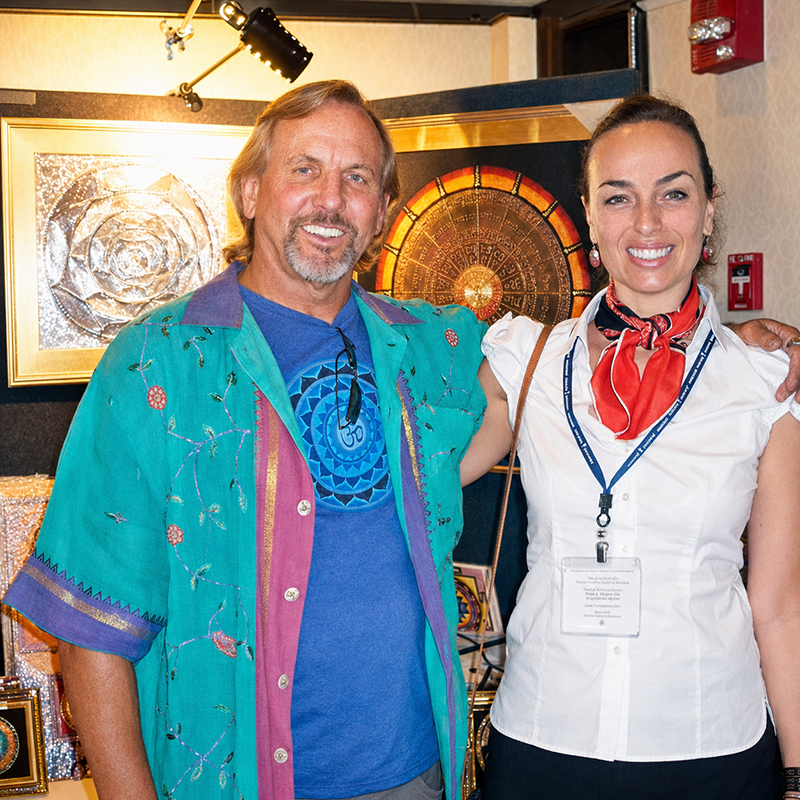
The Mandala as a Gateway to the Soul: Paul Heussenstamm in Conversation with Ebru Şinik
A mandala may begin with a circle, a centre and a few colours. Yet for artist Paul Heussenstamm, the creative process opens a much larger inner landscape.
In this inspiring conversation, he explains how painting mandalas can become a relationship with intuition, consciousness, creativity and the soul.
“The mandala is a doorway into your own soul. When you paint one, you begin a continuing relationship with your inner world.”
When Painting Becomes an Inner Practice
Paul Heussenstamm is known for richly coloured spiritual paintings centred on mandalas, sacred geometry, contemplative symbols and images of the natural world.
His work does not approach the mandala merely as a decorative composition. He sees it as a living visual language through which the artist may encounter parts of the self that cannot always be expressed in words.
Colour, repetition, symmetry, intuition and the movement towards a centre become part of a creative form of contemplation.
In her conversation with Heussenstamm, Ebru Şinik explores how this process begins, what it may reveal and why people do not need to consider themselves professional artists before creating a personal mandala.
What Exactly Is a Mandala?
The word mandala comes from Sanskrit and is frequently associated with a circle, a centre or a sacred spatial arrangement.
Historical mandalas are not always simply round images. Many contain a circle within a square, with gates, directions, layers and a central point. In religious and contemplative traditions, these structures may symbolise a sacred realm, a temple, the cosmos or a path of awareness.
Circular and centrally organised forms also appear in the art and symbolism of many cultures, although their meanings and traditions should not be treated as identical.
In Heussenstamm’s personal artistic language, the circle represents consciousness, while the centre becomes an image of the heart and the soul.
The Visual Language of the Mandala
The Circle
Wholeness, continuity, movement and the field of consciousness surrounding the centre.
The Square
Structure, stability, the four directions and the symbolic architecture of a sacred space.
The Centre
The point towards which the entire image returns and from which its movement begins.
Three Encounters with Colour and Form
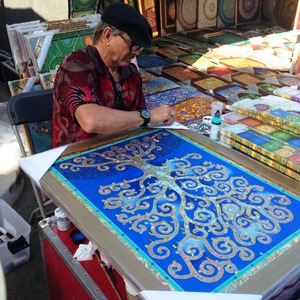
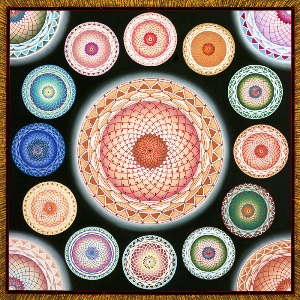
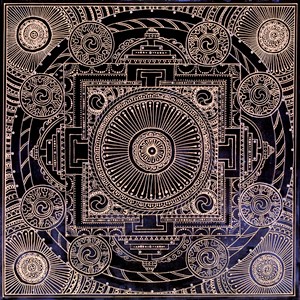
Can a Mandala Help Transform Our Lives?
Heussenstamm believes that looking at a mandala can gradually redirect attention from the external world towards the interior.
When the eyes follow the shapes towards the centre, the viewer is not simply observing an artwork. The image may become a visual focus for contemplation, stillness and self-questioning.
For Heussenstamm, the centre of the mandala represents the heart centre. Meditating with the eyes open and resting awareness on the image can therefore become a way of encountering one’s own inner centre.
This is his spiritual and artistic interpretation. Each person’s experience may be different, and meaningful change emerges through continuing practice rather than through the image alone.
“When you look at a mandala, what you are really doing is looking more deeply into yourself.”
How Did Spiritual Painting Change His Life?
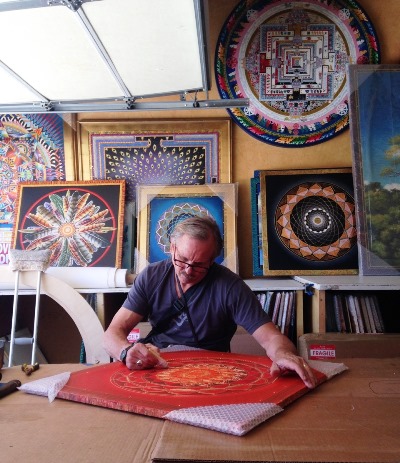
Heussenstamm describes the beginning of his mandala practice as a decisive turning point.
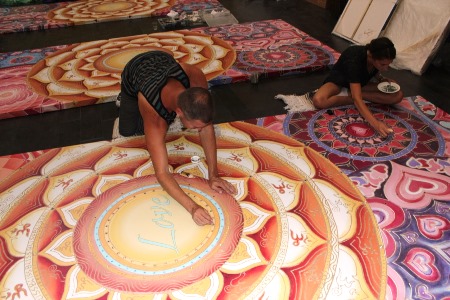
Once he began painting mandalas, he felt unable to stop. The practice became central to his work, his teaching and the way he understood his own creative life.
His paintings later reached people from many countries and brought him into contact with collectors, teachers, artists and international communities.
Yet the most important change, in his description, was not external recognition. It was the continuing inner relationship created through painting.
Why Does He Call the Mandala a Teacher?
A personal mandala does not arrive as a set of verbal instructions. It teaches by revealing colours, patterns, contrasts and symbols that emerge through the artist.
Heussenstamm describes the painting as a threshold. On one side is the conscious personality holding the brush. On the other are intuitive and spiritual forces seeking visual expression.
The more mandalas a person paints, the more familiar this inner language may become. Repeated patterns can reveal recurring concerns, emotional movements or qualities that are asking for attention.
In this sense, the mandala becomes a teacher because it reflects the artist back to themselves.
A Simple Way to Begin Painting
Begin with Colour
A colouring book or a simple printed template can remove the pressure of drawing the entire structure yourself.
Work from the Centre
Create a central point and allow shapes, colours and repeated forms to develop around it.
Start Small
A modest surface feels less intimidating. Larger and more complex paintings can follow with practice.
Continue Practising
Confidence grows through repetition, observation and the willingness to remain curious.
Do You Need a Mandala Teacher?
Heussenstamm suggests that beginners can start alone with coloured pencils, templates and small paintings.
A teacher, however, may help the student understand materials, proportions, layering, colour relationships and the emotional resistance that often appears during creative work.
The purpose of guidance is not to make every painting look the same. It is to help each person trust the visual language that is beginning to emerge.
“I Am Not Talented Enough to Paint”
Many people arrive at a creative practice already convinced that they are not artistic.
Heussenstamm believes that this judgement usually describes only the inexperienced part of the person—not the full extent of their creative capacity.
After completing several mandalas, students often begin to recognise that they understand more about colour, balance and imagery than they previously imagined.
The essential requirement is not exceptional talent. It is enough to begin, continue and allow creativity to become visible.
Why Create Your Own Mandala?
A mandala chosen from a book or viewed in a gallery may offer beauty and inspiration. A mandala created personally carries another dimension: it records a direct encounter with the inner landscape of its maker.
Each painting can reveal a different emotional climate, stage of life, question or emerging quality. One may feel expansive and luminous; another may be quiet, restrained or protective.
Heussenstamm encourages people to remain students of their own paintings. Rather than deciding immediately what each symbol means, they can live with the image and observe what it continues to reveal.
The benefit lies not only in the finished artwork, but in the attention developed while making it.
How Can a Mandala Become Part of Daily Life?
Display It at Home
Place it where you naturally pause, reflect, breathe or spend quiet time.
Bring It into Workspaces
A mandala may act as a visual reminder to return to the centre during a busy day.
Carry a Small Version
A photograph, print or small personal drawing may travel with you as a private symbol.
Where Should Mandalas Be Placed?
Heussenstamm believes mandalas can be placed throughout homes, studios and workplaces because he experiences them as spiritual rather than limited to a single religion.
At the same time, specific mandalas belonging to Hindu, Buddhist and other traditions may carry precise religious meanings and should be approached with cultural respect.
Personal contemporary mandalas may function more openly—as artworks, contemplative focal points or reminders of balance and inner attention.
“The Journey of the Artist Is the Discovery of the Soul”
Painting is not Heussenstamm’s only contemplative or self-reflective practice.
At the time of the interview, he described decades of experience with meditation, yoga and Ayurveda.
Through the Ayurvedic language of the doshas, he associated himself particularly with the qualities of fire: intensity, transformation, vision and creativity.
These practices became different paths towards a similar destination—learning to observe the self and remain connected with a deeper source of creative energy.
Connection, Feminine Wisdom and the Shape of the Circle
When Ebru Şinik asks what message his soul would offer humanity, Heussenstamm returns to the symbolism of the circle.
For him, the circle carries qualities often associated with feminine wisdom: connection, inclusion, continuity, care and relational awareness.
He believes modern societies have become excessively directed by analytical thought, competition and traditionally masculine systems of power.
His hope is not to reject the mind, but to restore balance by bringing greater compassion, ecological care and feminine leadership into environmental and political life.
The mandala has taught him to experience humanity not as isolated individuals, but as parts of one interconnected whole.
“The mandala has given me the experience that we are all connected in this world.”
An Unexpected Beginning
In the interview, Heussenstamm recalls that Barbra Streisand was present on the morning he completed his first mandala painting.
According to his recollection, she responded immediately to the work and asked him to create another painting. Other people in the room expressed interest as well.
The experience gave him an extraordinary sense that something larger had opened from the very first day of the practice.
He later came to associate this moment with the mystery of the mandala: an image created through private intuition could unexpectedly connect with another person.
Where Does Paul Heussenstamm Create His Work?
Heussenstamm describes Laguna Beach, California, as a community shaped by art, studios and seasonal festivals.
He worked for many years from a studio in Laguna Canyon before moving his painting practice to his home in the hills overlooking the ocean.
From there, his mandalas travelled to collectors and students in numerous countries, creating an international community around his paintings and workshops.
Meeting Paul Heussenstamm and His Mandalas
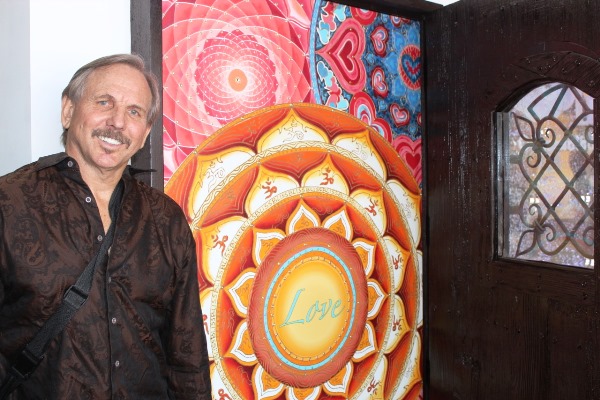
Ebru Şinik remembers clearly the first time she encountered Heussenstamm and his remarkable paintings at a Seduction of Spirit event.
In the years that followed, she continued to see him and his work at many university events in California.
She observed not only the continuity of his artistic presence, but also the growing international diversity of the participants and their changing relationship with meditation, awareness and spiritual art.
Her question to Heussenstamm invited him to reflect on how the audiences, visual preferences and wider awareness had changed over the years.
How Did the Audience for Spiritual Art Change?
Heussenstamm observed a gradual visual transition in university programmes and meditation environments.
Earlier imagery had often focused more directly on deities and symbols from Buddhist and Hindu traditions. Over time, flowers, trees, natural forms and contemporary mandalas became increasingly visible.
Online meditation programmes also introduced contemplative practices to much larger and more internationally diverse audiences.
Visiting teachers representing different approaches to psychology, spirituality, health and personal development brought new groups of participants into the programmes.
As people arrived from more countries, Heussenstamm’s paintings also travelled further, becoming part of homes and personal spaces across many cultures.
A Mandala Workshop in Istanbul
At the end of the conversation, Ebru Şinik shares her hope of welcoming Heussenstamm to Istanbul for a mandala workshop under the roof of Yükselen Çağ.
He responds that teaching in Türkiye would be a great honour. He had long wished to visit Istanbul and experience the city’s cultural and architectural heritage, including Hagia Sophia.
A previous family journey had included plans for a short visit to Türkiye, but an ankle injury prevented him from travelling.
He closes the interview by expressing his desire to visit Türkiye and share the mandala-painting process with Turkish participants in the future.
Five Lessons from the Mandala
Return to the Centre
The centre offers a visual reminder to pause and reconnect with what feels essential.
Trust Colour and Intuition
Creative choices do not always need to be explained before they are made.
Practice Reveals Ability
Creativity becomes more visible when judgement is replaced by repetition and curiosity.
Observe Before Interpreting
A personal symbol may reveal its meaning gradually rather than through immediate analysis.
Art Can Become a Relationship
The mandala is not only an object to finish. It can become an ongoing conversation with the inner world.
A Doorway Drawn in Colour
Paul Heussenstamm’s mandalas invite us to see creativity not as a rare gift possessed only by professional artists, but as a human capacity waiting for attention.
The first line, circle or colour does not need to be perfect. It only needs to open the process.
From that centre, a visual journey begins— one shape, one layer and one discovery at a time.
Mandala Painting, Creativity and Inner Awareness
What is a mandala?
A mandala is a centrally organised visual form often associated with circles, sacred space and contemplative traditions. Its specific meaning varies between cultures and spiritual systems.
Are mandalas always circular?
No. Many mandalas include circles, but traditional compositions may also contain squares, gates, directions and architectural structures.
What does the centre of a mandala represent?
The meaning depends on the tradition and the artist. For Paul Heussenstamm, it represents the heart centre, consciousness and the soul.
Can anyone learn to paint a mandala?
Yes. Beginners can start with simple templates, coloured pencils or a small canvas. Artistic confidence generally develops through practice.
Do I need to be talented before I begin?
No. Mandala painting can be approached as exploration rather than performance. The purpose does not need to be producing a perfect artwork.
How should I begin my first mandala?
Begin with a centre point, choose a few colours and allow repeated shapes to develop around the centre. A template may make the first attempt easier.
Is mandala painting a form of meditation?
It may become a meditative creative practice when attention rests on colour, repetition, breathing and the present moment. Experiences vary from person to person.
Where should a mandala be displayed?
It may be displayed wherever it supports reflection or brings visual harmony, such as a living room, meditation area, studio or workspace.
Are mandalas connected to one religion?
Mandalas have important roles in several religious traditions, especially Hinduism and Buddhism. Contemporary personal mandalas may also be created outside a particular religious framework.
Can a mandala transform a person’s life?
Creative and contemplative practices may support reflection, attention and self-awareness. A mandala alone does not guarantee a specific psychological or spiritual outcome.
Creative Practice Note
The spiritual interpretations shared in this interview express Paul Heussenstamm’s personal artistic philosophy. Mandalas have different meanings and functions across cultures, traditions and individuals.
Mandala painting may support creativity, contemplation and personal reflection, but it is not a substitute for psychological or medical care when professional support is needed.
Ebru Şinik
Wellbeing Coach & Ayurveda Instructor,
Holistic Health Author