
A SWOT Analysis of Superintelligence and Genesis
Throughout its evolutionary journey of approximately 300,000 years, Homo sapiens has witnessed profound transformations.
Artificial intelligence is now beginning a new era of transformation that may reshape how humanity perceives the world, produces, learns and makes decisions.
Artificial intelligence is not merely a technological tool; it is a global transformation that requires us to reconsider human dignity, free will, ethics, privacy, working life and holistic wellbeing.
Humanity’s Journey from Fire to Artificial Intelligence
The control of fire, the invention of writing, the printing press, the Industrial Revolution and the internet changed not only everyday life but also the way human beings perceive and interpret the world.
Artificial intelligence applications, which for many years were primarily used in specialised fields, have rapidly entered the daily lives of large populations, particularly in recent years.
From where we stand today, it is becoming increasingly clear that artificial intelligence has the potential to create a transformation as powerful as the discovery of fire or writing.
The Transformation Artificial Intelligence Is Bringing to Our Lives
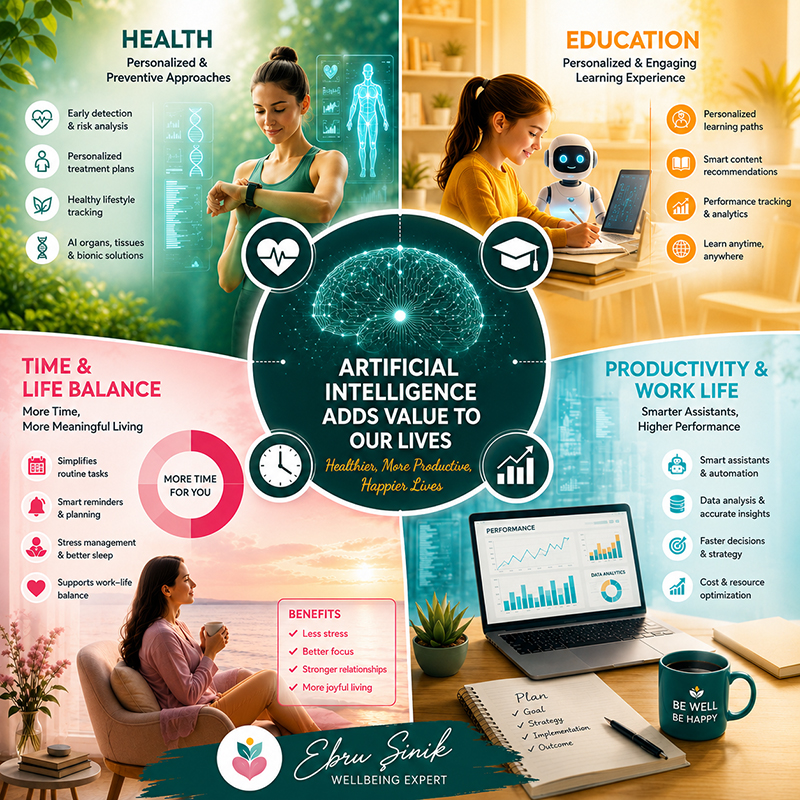
Artificial intelligence can save time, labour, cost and energy in many areas, including industry, healthcare, security, education and the processing of large and complex datasets known as big data.
It offers particularly important opportunities in personalised healthcare, early-detection systems, artificial organ and tissue research, bionic limb technologies and wellaging studies.
Looking at Artificial Intelligence from a Holistic Perspective
A SWOT analysis allows us to evaluate a subject through its strengths, weaknesses, opportunities and threats. I believe that artificial intelligence should be understood not only through exciting applications or frightening future scenarios, but by considering all four perspectives together.
Strengths
Speed, analytical capacity, personalisation, automation and resource efficiency.
Weaknesses
Challenges involving transparency, data quality, auditability and dependence on human judgement.
Opportunities
New solutions in healthcare, education, science, working life and personal development.
Threats
Data breaches, mass surveillance, job losses, inequality and the concentration of power.
What Artificial Intelligence Is Bringing to Our Lives
Physical Health
Personalised healthcare, early-detection systems, artificial organ and tissue research, bionic limb technologies and healthy-ageing applications.
Mental Health
Applications supporting access to psychological guidance, stress-management tools, breathing, meditation and quality-sleep practices.
Education
Personalised educational alternatives that can be adapted according to an individual’s learning pace, knowledge level, needs and professional goals.
Time and Work Efficiency
Assistant services, the automation of routine tasks, faster access to information and the opportunity to establish a more balanced work-life relationship.
Building a Healthier Relationship with Technology
I believe it is necessary to follow technological developments that have such a significant capacity to influence daily life, particularly to maintain balance in our careers, financial wellbeing and the skills required by the current age.
However, we live in a time when an almost unlimited amount of information is circulating. When we consider the human capacity to learn and the amount of time available for learning, attempting to consume every piece of information we encounter is not sustainable.
Filtering information according to our own sphere of influence, and then selecting it according to our interests and genuine needs, can improve the quality of our lives.
Why Is Digital Literacy Important?
Digital literacy is not merely the ability to use technological tools.
It is the ability to question the information we encounter, evaluate sources, protect our personal data and recognise how technology directs our attention.
Ethics, Security and Global Power Balances
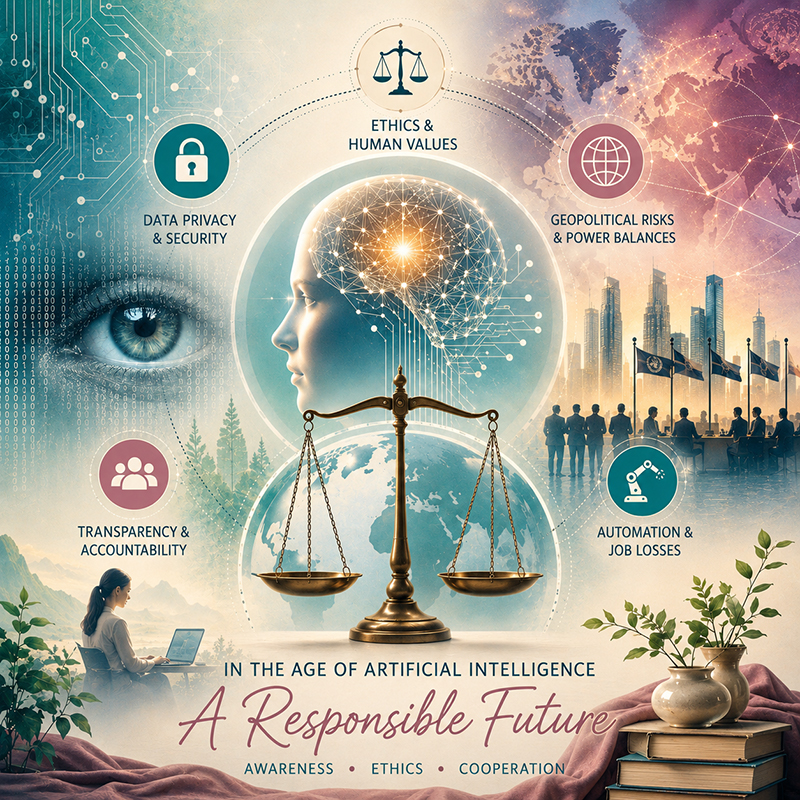
Alongside its strengths, artificial intelligence also has unresolved weaknesses and potential threats for humanity.
Warnings that advanced artificial intelligence systems may create serious global risks are increasing, particularly if the necessary ethical and legal regulations are not established.
These risks concern not only technology, but also human rights, working life, mental health, international security and the balance of power between countries.
Potential Costs of the Artificial Intelligence Process
Lack of Consensus on Ethical Principles
Developers, companies and countries have not yet reached sufficient agreement on shared human and ethical principles.
Data Privacy and Security
Continuing gaps involving the use of personal data, algorithmic surveillance and cybersecurity.
Attention and Mental Health
Difficulty concentrating, sleep problems, anxiety and mental fatigue may occur when digital systems are not managed consciously.
Job Losses and Inequality
The disappearance of certain professions or job descriptions may lead to job losses, income inequality and difficulties in professional adaptation.
Non-Transparent Decisions
The decision-making processes of artificial intelligence systems are not always open, understandable or auditable.
Centralisation of Power
Technological power may become concentrated in the hands of a limited number of countries or technology companies.
Surveillance and Behavioural Manipulation
Artificial intelligence may be used for mass surveillance, behavioural manipulation, disinformation or social control.
Technological Singularity and Human–Machine Integration
Singularity, or technological singularity, refers to the possibility that artificial intelligence may surpass human intelligence at a certain stage and that technological developments may accelerate beyond human predictability.
While bionic limbs and neurotechnology may improve human life, their potential consequences for human identity, free will, privacy and equality are not yet fully understood.
Artificial Intelligence, Hope and the Human Spirit
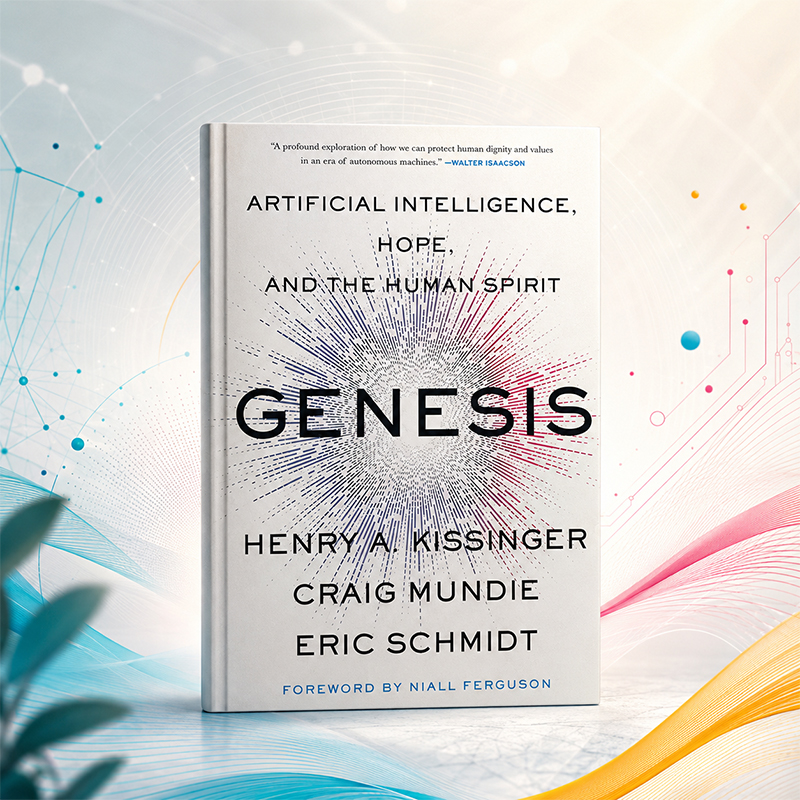
Following this introduction, I would like to discuss Genesis, a book jointly written by three influential figures in the fields of artificial intelligence, technology and global policy.
Its full title, Genesis: Artificial Intelligence, Hope, and the Human Spirit, reflects its comprehensive examination of the transformative effects of artificial intelligence, the hope it offers and the challenges it creates.
Three Different Fields of Experience
Published in November 2024, the book was written by three significant figures:
- Henry Kissinger examines artificial intelligence through the perspectives of geopolitical balances, diplomacy, global security and international relations.
- Eric Schmidt, former CEO of Google, contributes his experience from the technology and business worlds.
- Craig Mundie, Microsoft’s former Chief Research and Strategy Officer and Senior Adviser to the CEO, shares his expertise in technological innovation and strategy.
Genesis also has special significance because it was the final book Henry Kissinger worked on before his death.
Following Kissinger’s death in 2023, the book was completed by Eric Schmidt and Craig Mundie. It examines the potential of artificial intelligence to reshape global power structures, economies and social dynamics.
The Main Subjects Examined in Genesis
Human Dignity in the Age of Artificial Intelligence
How human identity, free will, decision-making capacity and fundamental human values can be protected.
Geopolitical Risks
How artificial intelligence capacity may alter power balances, security policies and international relations between countries.
The Defining Role of Companies
The power, responsibilities and need for oversight of major technology companies within the artificial intelligence ecosystem.
International Cooperation
The necessity of establishing shared ethical standards, safety principles and international regulations.
What Distinguishes Artificial Intelligence from Earlier Technologies?
The book emphasises that artificial intelligence is a revolutionary force comparable with historical transformations such as the invention of the printing press, the Industrial Revolution and the discovery of nuclear energy.
However, one significant characteristic distinguishes artificial intelligence from earlier technologies: it is moving beyond being merely a passive tool used by humans.
It is becoming an active collaborative element that generates information, offers recommendations and, within certain boundaries, participates in decision-making processes.
Geopolitical Effects
The use of artificial intelligence systems in defence, intelligence, propaganda, cybersecurity and economic competition may change the balance of power between countries.
Corporate Power
Critical decisions involving datasets, models and infrastructure investments being made by a limited number of companies may create a significant concentration of power.
Ethical Responsibility
Governments, independent institutions, scientists and civil society must oversee this process in accordance with the principles of transparency and public benefit.
Questions We Must Answer as Humanity
When an artificial intelligence system makes a decision on behalf of a person, who will be held responsible?
When algorithms decide which information people can access, to what extent can free will be protected?
If artificial intelligence recommendations begin to take precedence over human judgement, could our decision-making ability weaken?
The central issue is not merely what artificial intelligence can do, but what we, as humanity, will authorise it to do.
Wellbeing in the Age of Superintelligence
Genesis is an important work that evaluates both the life-enhancing solutions and the risks of the Superintelligence era.
It demonstrates the necessity of balanced regulation, human-centred design and ethical principles.
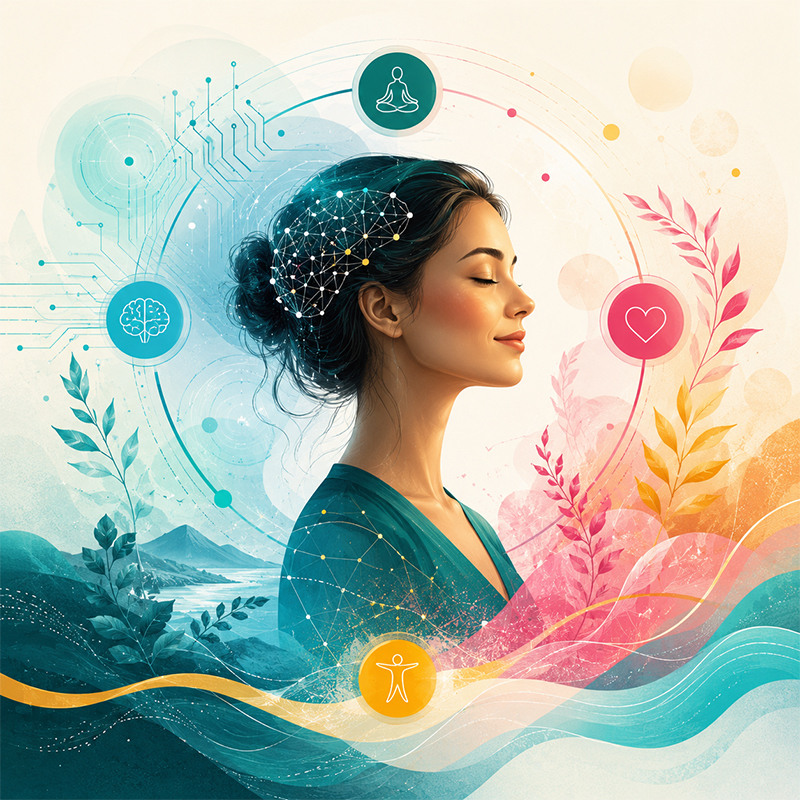
In my view, the fundamental question is not whether artificial intelligence will continue to develop, but how human beings will preserve their essence, relationship with nature, free will and holistic wellbeing throughout this process.
Humanity’s New Responsibility
Distancing ourselves from technology or rejecting it entirely is not a realistic solution.
However, defining the boundaries of our relationship with technology, improving our digital literacy, protecting our attention and remembering the indispensable values of being human remain our responsibility.
In my forthcoming articles, I will continue with recommendations for protecting the physical, mental, emotional, social and environmental wellbeing of Homo sapiens in the age of Superintelligence.
Be Well, Be Happy!
Frequently Asked Questions About Superintelligence and Genesis
What is Superintelligence?
Superintelligence refers to a hypothetical stage of development in which artificial intelligence may surpass human intelligence across many cognitive domains.
What is the book Genesis about?
Genesis: Artificial Intelligence, Hope, and the Human Spirit examines the effects of artificial intelligence on humanity, global power balances, ethics, human dignity and free will.
Who are the authors of Genesis?
The book was written by Henry Kissinger, Eric Schmidt and Craig Mundie.
What opportunities does artificial intelligence offer in healthcare?
Personalised healthcare, early-detection systems, big-data analysis, bionic limbs and artificial organ research are among the significant opportunities.
What are the main ethical risks of artificial intelligence?
Data privacy, algorithmic bias, mass surveillance, non-transparent decisions, behavioural manipulation and the concentration of technological power in a limited number of organisations are among the principal risks.
How can wellbeing be protected in the age of artificial intelligence?
Developing digital literacy, managing attention consciously, prioritising data security, setting boundaries for technology use and protecting human relationships and our connection with nature are important.
Can artificial intelligence completely replace human beings?
Artificial intelligence can automate certain tasks and change the structure of professions. However, the defining human role continues in areas such as ethical judgement, responsibility, empathy, human relationships and the creation of meaning.
Wellbeing Note
Artificial intelligence-based health, psychological-support or wellbeing applications do not replace professional healthcare services.
Decisions concerning physical or mental health should be based on the assessment of appropriately qualified healthcare professionals.
Ebru Şinik
Wellbeing Coach & Ayurveda Instructor,
Holistic Health Author