
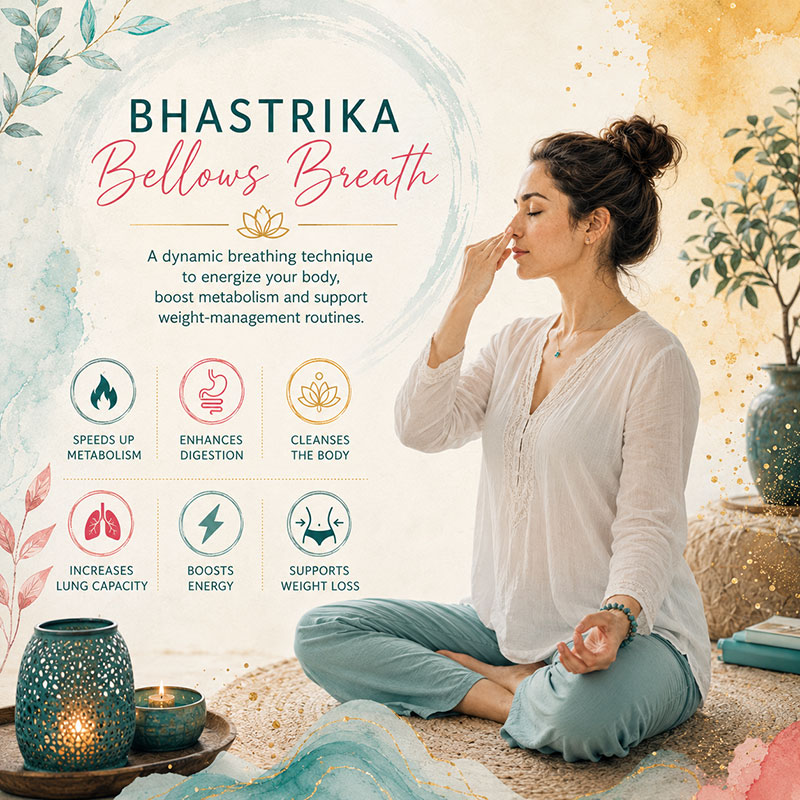
Breathing Techniques to Lose Weight No: 1
Bhastrika, also known as bellows breath, is a strong and energising pranayama technique traditionally used to stimulate the body, awaken digestive fire and increase vitality.
When practised correctly and within your comfort zone, Bhastrika may support metabolism, digestion and a more energised state during a conscious weight-management journey.
Bhastrika is a powerful technique. Safety, contraindications and proper progression must always come before intensity.
Read the Contraindications Carefully
Before practising the pranayama techniques described in Ebru Şinik’s breathing guide, it is especially important to review the list of contraindications.
Bhastrika is an activating and heating technique. Unlike gentle calming breathwork, it strongly engages the respiratory system, abdominal region and nervous system.
For this reason, it is strongly recommended that you watch the application video first and learn the technique carefully before beginning regular practice.
What Is Bhastrika?
Bhastrika means “bellows,” referring to the bellows used to intensify fire. In this technique, both inhalation and exhalation are performed actively through the nose.
The breath is stronger and more dynamic than ordinary breathing, creating a warming, stimulating and awakening effect in the body.
Traditionally, Bhastrika is used to support vitality, digestion, inner heat and movement in situations of sluggishness or low energy.
Important Contraindications
- On a full stomach or immediately after a main meal
- Pregnancy
- Menstruation, if the practice feels activating or uncomfortable
- Uncontrolled high blood pressure
- Chest pain
- Heart problems, especially recent or unstable conditions
- Epilepsy or a seizure within the past 6 months
- High eye pressure or glaucoma
- Panic attacks or strong anxiety sensitivity
- Hernia
- Ascites
- Paralysis or significant neurological conditions
- Swollen testicles
- Right before sleep
If you have any cardiovascular, respiratory, neurological or abdominal condition, you should seek medical or qualified professional guidance before practising Bhastrika.
What May Bhastrika Support?
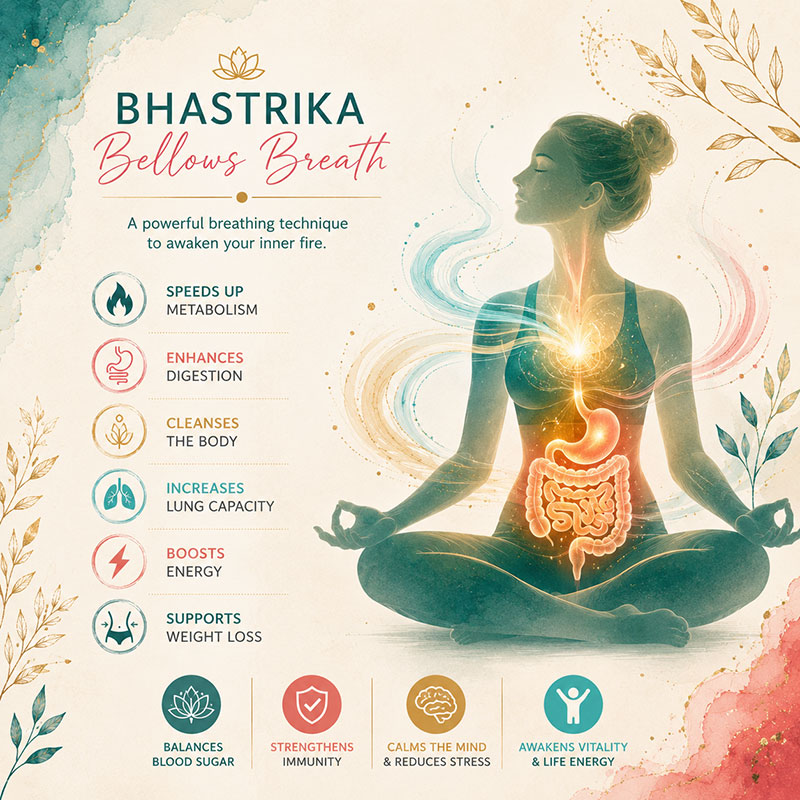
Individual results vary, and Bhastrika should not be understood as a medical treatment. However, when used appropriately, it may support several areas of vitality, metabolism and embodied awareness.
Metabolism and Weight-Management Support
As a heating and energising practice, Bhastrika may support a sluggish metabolism and complement a broader weight-management routine.
Digestive Activation
The rhythmic abdominal movement may help stimulate digestive awareness and support the feeling of activation in the digestive system.
Vitality and Warmth
Bhastrika may increase alertness, body heat and subjective energy, especially during periods of sluggishness or coldness.
Focus and Embodied Awareness
Because the practice is dynamic and rhythmic, it may help draw attention back into the body and increase present-moment focus.
Respiratory Strength and Capacity Awareness
Over time, the practice may help improve respiratory awareness and create a sense of expansion in the lungs and rib cage.
Circulation and Activation
The forceful rhythm of the breath may help create a stronger sense of circulation, warmth and activation throughout the body.
Why Is Bhastrika Often Chosen for a Morning Routine?
Because it is energising and warming, Bhastrika is often more suitable in the earlier part of the day rather than in the evening.
Many people prefer to use it when they feel mentally dull, physically sluggish or in need of a stronger internal sense of movement.
Since it may feel stimulating, it is not recommended immediately before sleep.
How to Practise Bhastrika
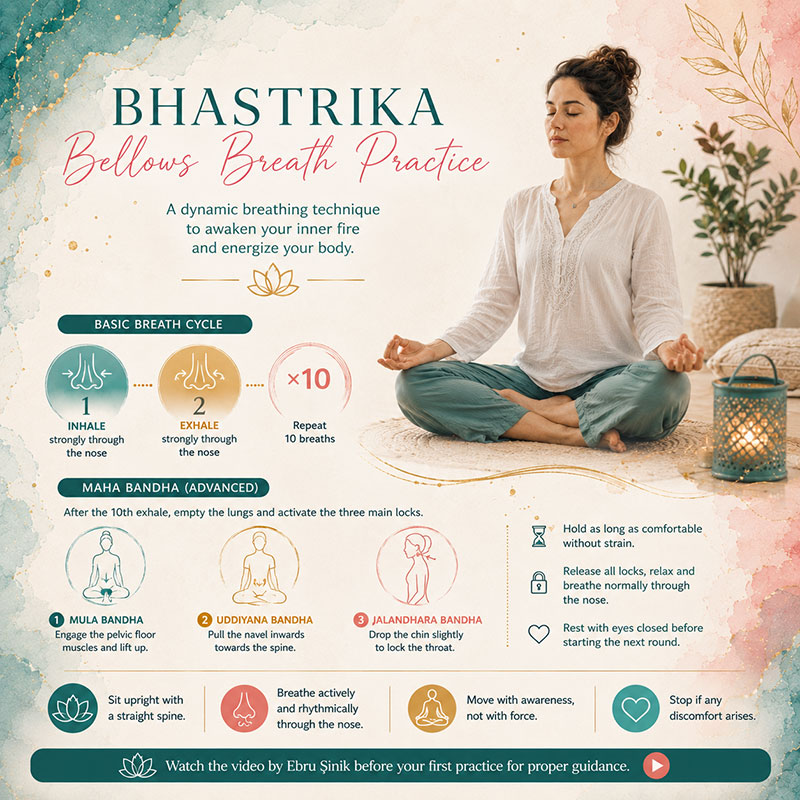
Sit Upright
Sit cross-legged on the floor and place a soft support under the sacrum to help keep the spine comfortably upright.
Prepare the Mouth and Tongue
Close the eyes and mouth. Let the tip of the tongue rest gently on the upper palate behind the front teeth.
Inhale Strongly Through the Nose
Inhale actively through the nose until the lungs feel comfortably full, without strain.
Exhale Strongly Through the Nose
Exhale actively again through the nose. Keep the rhythm steady and do not tense the face, jaw or shoulders.
Complete 10 Breaths
Complete 10 active breaths in one round. Then rest quietly before deciding whether to continue with the next round.
A Note About Maha Bandha
The original method may include the activation of the three main locks, known as Maha Bandha, after the exhalation. This is considered an advanced practice.
Because it combines breath retention with energetic and muscular locks, it is best learned in person from a qualified teacher rather than from written instructions alone.
If you are a beginner, it is perfectly acceptable to first learn basic Bhastrika without adding bandhas.
Comfort Always Comes Before Intensity
Even though Bhastrika is a dynamic practice, the body should remain grounded, upright and comfortable.
The neck, face and shoulders should stay relaxed. If the breath becomes strained or the body tenses up, stop and rest.
A powerful technique should still feel safe. Never go beyond your comfort zone.
Suggested Weekly Progression
Week One
Practise 10 breaths, rest, then 10 more. Total: 20 breaths per day.
Week Two
If comfortable, practise 20 breaths, rest, then 20 more. Total: 40 breaths.
Week Three
Progress to 2 × 30 only if the practice still feels comfortable. Total: 60 breaths.
Weeks Four and Five
Progress gradually up to 80 and then 100 breaths per day at most, only if this remains fully comfortable.
The maximum daily total described for this practice is 100 breaths. However, you never have to reach this number. Many people prefer to remain at a lower count.
If the practice creates discomfort, dizziness, agitation, pressure or strain, stop immediately and rest. Breathing techniques should never take you outside your comfort zone.
Watch the Bhastrika Practice Video
Before your first practice, it is strongly recommended that you watch the video prepared by Ebru Şinik and observe the rhythm and posture carefully.
Bhastrika/ Breathing Technique VideoLife Hidden in Breath
Ebru Şinik’s book Life Hidden in Breath – Breathing Techniques for Daily Life, presented on its English cover as Health, Breath & Life, explains breathing practices step by step.
The book includes detailed application guidance, duration recommendations, safety notes and QR-coded instructional videos.
Review the complete guidance before selecting the breathing techniques that best support your personal wellbeing needs.
Discover the Breathing GuideBe Well, Be Happy!
Bhastrika or Bellows Breath
What is Bhastrika breathing?
Bhastrika is a dynamic pranayama technique in which both inhalation and exhalation are performed actively through the nose.
Can Bhastrika help with weight loss?
It may support a broader weight-management routine by contributing to feelings of metabolic activation and vitality, but it is not a standalone weight-loss solution.
Can I practise Bhastrika after eating?
No. This practice should not be performed on a full stomach or immediately after a main meal.
Is Bhastrika suitable before sleep?
Usually no. Because it is energising and activating, it is generally better suited to the daytime rather than bedtime.
Do I need to practise up to 100 breaths?
No. The maximum does not mean the ideal amount for everyone. Many practitioners choose to remain at a lower number.
Should beginners practise Maha Bandha?
Beginners should ideally learn bandhas under qualified supervision. It is not necessary to add advanced locks when first learning Bhastrika.
What should I do if I feel dizzy or uncomfortable?
Stop immediately, return to normal breathing and rest. Do not continue the practice once discomfort begins.
Can Bhastrika replace medical treatment?
No. Bhastrika may support wellbeing, but it does not replace diagnosis, medication or professional medical care.
Wellbeing Note
Bhastrika is a strong and stimulating breathing technique and should be practised with care.
If you have cardiovascular, neurological, respiratory, abdominal or anxiety-related conditions, seek individual professional guidance before beginning this practice.
Ebru Şinik
Wellbeing Coach & Ayurveda Instructor