
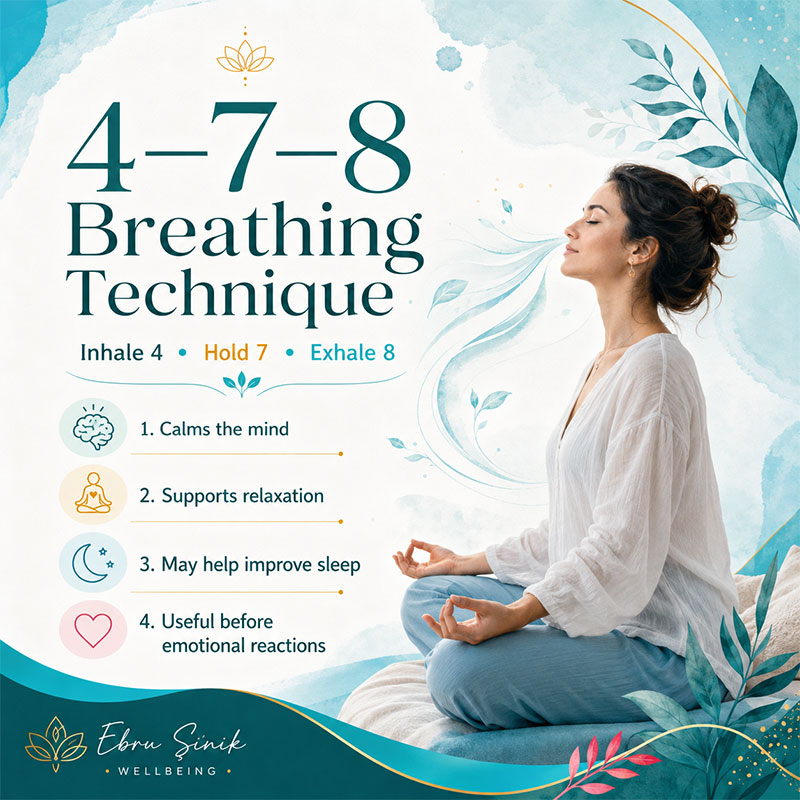
4–7–8 Breathing Technique
The 4–7–8 breathing technique, also known as “relaxing breath,” is a structured breathing practice in which you inhale for 4 counts, hold the breath for 7 counts and exhale for 8 counts.
With regular and comfortable practice, this technique may help calm the mind, support emotional regulation and create a smoother transition into rest and sleep.
The aim of 4–7–8 breathing is not to force the body, but to guide the nervous system towards a calmer and more regulated state.
What Is the 4–7–8 Breathing Technique?
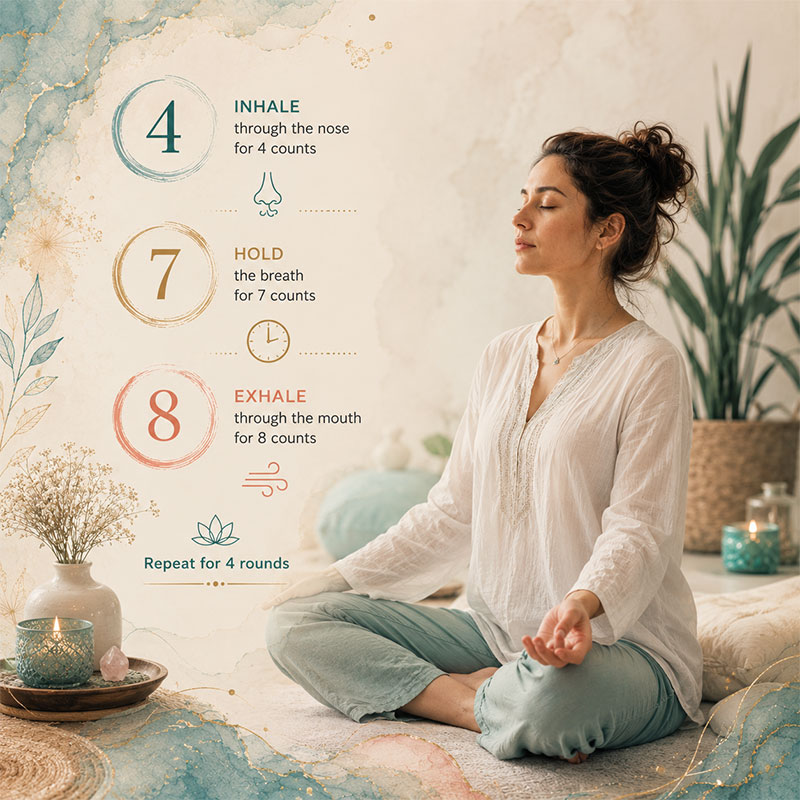
This breathing technique follows a simple ratio: inhale through the nose for 4 counts, hold the breath for 7 counts and exhale through the mouth for 8 counts.
It is commonly used as a calming practice, especially during periods of stress, emotional tension, restlessness or difficulty settling down before sleep.
The exhalation is intentionally longer than the inhalation, which may help the body shift away from activation and towards relaxation.
Position
Practise while sitting upright on the floor or on a stable chair.
Age
Generally not recommended for children younger than the teenage years.
Frequency
Practise twice in the morning and twice in the evening as a starting structure.
Rounds
Begin with 4 rounds per session and do not exceed 8 rounds in one sitting.
Important Contraindications and Safety Notes
Because this practice includes breath retention, it is not suitable for everyone. It should not be approached casually in situations where holding the breath may create strain or risk.
Do not practise during chest pain, acute respiratory distress, faintness or any severe physical discomfort.
People with uncontrolled high blood pressure, epilepsy or a seizure within the past 6 months, serious cardiovascular conditions, panic sensitivity or any condition worsened by breath retention should consult their physician before practising.
If the 7-count hold feels stressful, do not force it. A gentler breathing practice may be more appropriate until your body is ready.
What May 4–7–8 Breathing Support?
Calming the Mind
The structured rhythm may help reduce mental agitation and create a greater sense of inner quiet.
Supporting Sleep Preparation
When practised gently in the evening, it may help prepare the nervous system for rest and sleep.
Emotional Regulation
A short practice before reacting in anger or fear may help create a pause and support a calmer response.
Stress Regulation
With regular practice, it may support a more balanced nervous system response during stressful periods.
Impulse Awareness
A few rounds before reaching for comfort food may help soften urgency and create more awareness around cravings.
Long-Term Calm
When practised consistently and comfortably, it may help cultivate a more settled inner state.
A Practice of Ease, Not Force
This technique should feel controlled, quiet and intentional—but never stressful.
If you notice strain in the chest, throat, jaw or forehead, shorten the counts or return to natural breathing.
The purpose is not to achieve a perfect performance, but to establish a safe and repeatable calming rhythm.
How to Practise 4–7–8 Breathing
Sit Upright
Sit comfortably on the floor or on a chair with an upright but relaxed spine.
Inhale Through the Nose
With the mouth gently closed and the tongue resting comfortably behind the upper front teeth, inhale through the nose for 4 counts.
Hold the Breath
Hold the breath gently for 7 counts, without tightening the face, shoulders or jaw.
Exhale Through the Mouth
Exhale through the mouth for 8 counts, as though releasing the breath in a soft flowing sound.
Repeat for 4 Rounds
Complete 4 rounds per session in the beginning. After several weeks of regular practice, you may gradually increase to 8 rounds if this remains comfortable.
A Gentle Progression Matters
During the first month, it is generally best to practise only 4 rounds per session, twice daily.
After the fourth to sixth week, you may increase to 8 rounds per session if your breathing remains smooth and relaxed.
More is not necessarily better. Never exceed 8 rounds in a single sitting.
When Might This Technique Be Helpful?
Before Reacting in Anger
Practise 4 rounds before responding during emotional tension or frustration.
Before Sleep
It may be a calming part of an evening routine when the mind feels restless.
During Fear or Restlessness
The structured count may help redirect attention and create a steadier inner rhythm.
Before a Craving
A few rounds may create enough pause to observe an urge rather than react to it immediately.
If the breath-holding phase creates anxiety, dizziness or pressure, stop immediately and return to your natural breathing rhythm.
Watch the Application Video
Before your first practice, it is strongly recommended to watch the demonstration video so that you can observe the rhythm and technique clearly.
Sample Video Link HereLife Hidden in Breath
Ebru Şinik’s book Life Hidden in Breath – Breathing Techniques for Daily Life, presented on its English cover as Health, Breath & Life, explains breathing practices step by step.
The book provides detailed guidance, duration recommendations, safety notes and QR-coded application videos for individual techniques.
Review the complete instructions before choosing the practices that best support your needs.
Discover the Breathing GuideBe Well, Be Happy!
4–7–8 Breathing Technique
What is the 4–7–8 breathing technique?
It is a structured breathing method in which you inhale through the nose for 4 counts, hold the breath for 7 counts and exhale through the mouth for 8 counts.
Can 4–7–8 breathing help with sleep?
It may be a supportive calming practice before bedtime, especially for people whose minds feel active or restless.
How many rounds should beginners practise?
Beginners should start with 4 rounds per session. Only after several weeks of comfortable practice should they consider increasing towards 8 rounds.
Can I do more than 8 rounds?
No. It is generally not recommended to exceed 8 rounds in a single session.
Is this technique suitable for children?
It is generally not recommended for children younger than the teenage years, especially because it includes breath holding.
What should I do if I feel dizzy or anxious?
Stop the exercise immediately and return to normal breathing. Do not continue the session if the breath hold causes distress.
Can people with high blood pressure practise this technique?
Anyone with uncontrolled high blood pressure or a cardiovascular condition should first seek medical guidance before practising a breath-retention technique.
Does this breathing technique replace medical treatment?
No. It may support relaxation and stress regulation, but it does not replace medical diagnosis, prescribed treatment or psychological care.
Wellbeing Note
Breathing techniques that include breath retention should always be approached with extra care.
If you have a respiratory, cardiovascular, neurological or anxiety-related condition, seek individual professional guidance before beginning this practice.
Ebru Şinik
Wellbeing Coach & Ayurveda Instructor