
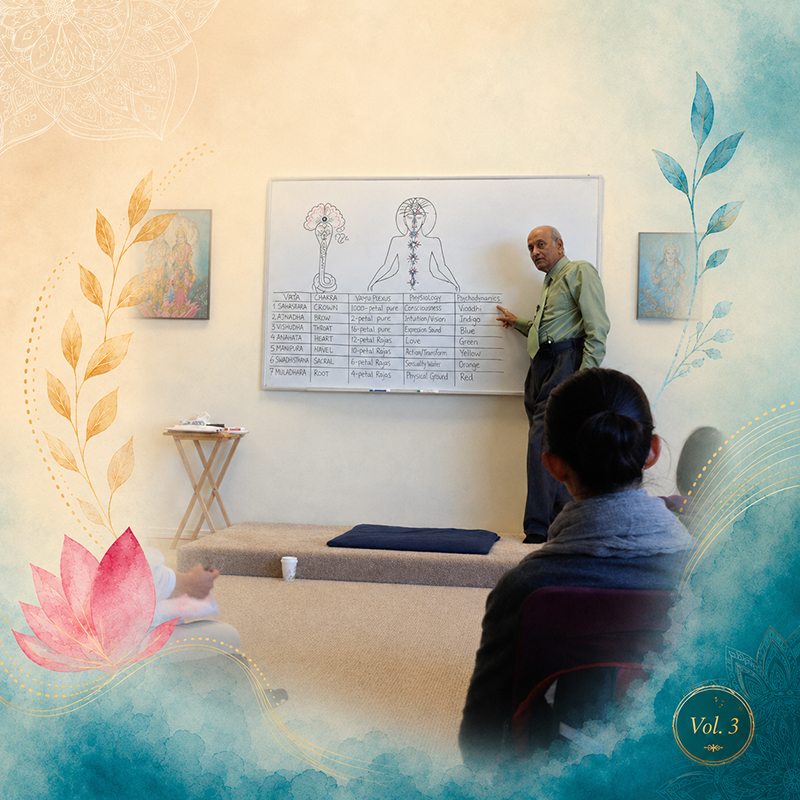
The Legendary Dr. Vasant Lad and Wellbeing Coach Ebru Şinik: An Ayurveda Interview – Vol. 3
In the final part of this rare and insightful interview, Dr. Vasant Lad shares his traditional understanding of pulse assessment, early imbalance and the inner sensitivity required in Ayurvedic practice.
He also reflects on mantra meditation, intention, witnessing awareness and the central role of compassion in becoming a true practitioner of Ayurveda.
This final volume brings the conversation from clinical observation to meditation, intention, compassion and the deeper spirit of Ayurvedic practice.
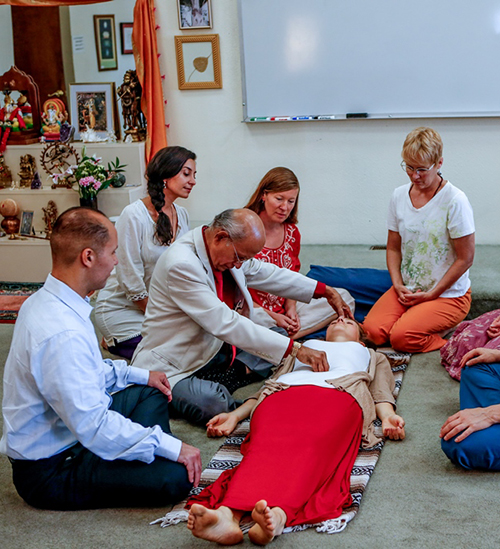
Can Everyone Learn Pulse Assessment?
Pulse assessment has an important place within the traditional practice of Ayurveda. Dr. Vasant Lad is widely known for his deep experience in this field.
“Any person who is sincere and learns the technique can learn pulse diagnosis.”
Dr. Vasant Lad
According to Dr. Lad, once a person learns the correct technique, they can gradually deepen their understanding of the pulse through repeated practice.
He does not describe this skill as requiring a special spiritual gift. However, he emphasises that sincerity, sensitivity and discipline are necessary.
He also recommends pranayama, especially Anuloma Viloma, because he believes that breathing practices can make the fingertips more sensitive.
In his words, the tips of the fingers become like “electrodes” or “sensors” of the pulse.
Dr. Lad explains that mudras and breathing exercises may refine this sensitivity, and that dedicated students can attend specialised pulse-training programmes to study and practise this traditional art more deeply.
Traditional Pulse Assessment Is Not a Substitute for Medical Diagnosis
Ayurvedic pulse assessment is part of a traditional interpretive system. It should not be presented as a validated medical diagnostic tool.
Symptoms, disease risk, screening and diagnosis require appropriate medical evaluation, laboratory tests, imaging and clinical examination when needed.
Traditional assessment may be explored as part of a cultural or complementary wellbeing framework, but it should never delay or replace evidence-based care.
What Is the Earliest Stage of Disease According to Ayurveda?
Ebru Şinik asked Dr. Lad about the six-stage model of disease described in Ayurvedic medicine and whether pulse assessment can identify imbalance before symptoms appear.
“The initial stage of disease is called sanchaya prakopa. Sanchaya means accumulation.”
Dr. Vasant Lad
In the traditional Ayurvedic framework described by Dr. Lad, sanchaya means accumulation.
He explains this as the accumulation of vata in the colon, pitta in the intestine and kapha in the stomach.
According to his pulse-assessment model, the organ pulse may reflect these early patterns of accumulation.
For example, he describes a weak colon pulse combined with a vata spike as indicating gas accumulation in the colon within the traditional Ayurvedic interpretation.
Similarly, he explains that the stomach is considered the seat of kapha, and that a weak stomach pulse accompanied by a kapha spike may indicate overload in that region.
Dr. Lad presents this as one of the values of pulse assessment: the possibility, within the traditional model, of recognising imbalance before clear symptoms or pathology have appeared.
Different Systems Use Different Languages
Dr. Lad contrasts traditional Ayurvedic observation with modern medicine, which generally relies on symptoms, physical examination, laboratory values, imaging and measurable pathophysiological changes.
This difference does not mean that modern medicine is unable to detect early disease. Many screening tests and preventive assessments are specifically designed for early detection.
A more balanced way to understand this distinction is that Ayurveda and modern medicine use different models, vocabulary and methods of observation.
What Is Your Advice on Meditation?
Ebru Şinik asked Dr. Lad whether mantra meditation or Buddhist mindfulness meditation is more beneficial, and what role intention plays before meditation.
“The power of intention is very beautiful because intention gives you attention, and attention becomes awareness.”
Dr. Vasant Lad
Dr. Lad explains that he deeply values Buddhist mindfulness meditation, but that mindfulness can be difficult for beginners.
For this reason, he suggests beginning with mantra meditation.
In his explanation, mantra meditation begins with audible repetition. The practitioner sits in a quiet space and repeats a short mantra continuously for a period of time.
He suggests that a simple sound such as Om, or a sacred name meaningful to the practitioner, may be repeated without long pauses so that the mind has fewer opportunities to wander.
In the next stage, the practitioner sits quietly and feels the mantra inwardly, allowing the mind itself to continue the repetition without verbalisation.
In the third stage, Dr. Lad describes the practice as entering witnessing awareness. The practitioner observes the mantra, the body and the mind without effortful control.
According to his spiritual interpretation, mantra meditation can gradually lead the practitioner from sound to silence, and from repetition to witnessing presence.
The Natural Mantra of the Breath
Dr. Lad describes So’Hum as a natural mantra already present in the breath.
In this practice, the practitioner silently follows the sound of the breath: inhaling with the awareness of “So” and exhaling with the awareness of “Hum.”
He explains that, as the practice deepens, emotional material such as grief or sorrow may come into awareness and gradually soften.
He also emphasises the silent gap between inhalation and exhalation, describing it as a space beyond ordinary time and as an opening into inner peace.
Meditation Is Supportive, Not a Cure-All
Dr. Lad’s statement that mantra meditation can “heal” belongs to a spiritual and traditional context.
Meditation may support calmness, attention, emotional regulation and wellbeing for many people.
However, it does not diagnose, prevent or treat medical or psychiatric conditions.
People with trauma history, severe anxiety, psychosis, epilepsy or significant psychological distress may need professional guidance before beginning intensive meditation practices.
A Simple Way to Begin
Choose a Short Mantra
Select a short sound, word or phrase that feels meaningful and calming.
Repeat Gently
Repeat the mantra softly or silently, without forcing concentration.
Rest in Awareness
When the mind wanders, return gently to the mantra and then allow moments of silence to appear naturally.
What Is Your Advice for Those Who Wish to Become Good Ayurvedic Specialists?
In the final question, Ebru Şinik asked Dr. Lad what he would recommend to people who wish to become good Ayurvedic specialists and share this light with themselves and their communities.
“When you love humanity, out of that love comes compassion, and that compassion is passion for all.”
Dr. Vasant Lad
Dr. Lad explains that becoming an Ayurvedic specialist is not only a matter of studying texts, techniques or clinical methods.
It requires love for every individual, regardless of background, belief, colour, caste, creed or religion.
From this love, he says, compassion arises. And from compassion comes the passion to serve all.
In his understanding, healing begins in that field of compassion.
He describes the environment of true being as vibrant, full of light, clarity, purity and compassionate perception.
Four Themes That Complete the Interview
Sensitivity Through Practice
Dr. Lad presents pulse assessment as a skill developed through sincerity, technique, repetition and refined awareness.
Traditional Models of Imbalance
The six stages of disease describe the Ayurvedic understanding of how imbalance may unfold before becoming visible.
Mantra as a Pathway
Mantra meditation is presented as a progressive movement from sound to inner silence and witnessing awareness.
Compassion as the Foundation
For Dr. Lad, true Ayurvedic practice is rooted in love, humility and compassion for all beings.
The End of the Ayurveda Interview Series
This final volume completes Ebru Şinik’s special three-part conversation with Dr. Vasant Lad.
Be Well, Be Happy!
Pulse Assessment, Meditation and Ayurveda Practice
What is Ayurvedic pulse assessment?
It is a traditional Ayurvedic method of observing the pulse at the wrist and interpreting it through the language of doshas, organs and constitutional patterns.
Can pulse assessment diagnose disease?
It should not be used as a substitute for medical diagnosis. Symptoms and health risks require appropriate clinical evaluation and evidence-based care.
What is sanchaya in Ayurveda?
Sanchaya is traditionally translated as accumulation and is described as the earliest stage in the Ayurvedic model of disease development.
Does Ayurveda detect disease earlier than modern medicine?
Ayurveda and modern medicine use different frameworks. Modern medicine has many validated early-detection and screening tools. Ayurvedic pulse assessment should be understood within its traditional context.
What is mantra meditation?
Mantra meditation is a practice in which a sound, word or phrase is repeated aloud, softly or silently to support concentration and inner stillness.
What is So’Hum meditation?
So’Hum meditation follows the natural rhythm of the breath, with “So” associated with inhalation and “Hum” associated with exhalation.
Can meditation heal disease?
Meditation may support wellbeing, attention and stress regulation, but it does not replace medical diagnosis or treatment.
What did Dr. Lad advise future Ayurvedic specialists?
He emphasised love for humanity, compassion, humility and service as essential qualities for anyone wishing to practise Ayurveda sincerely.
Wellbeing Note
This article presents Dr. Vasant Lad’s personal experiences and traditional Ayurvedic, yogic and spiritual perspectives.
Pulse assessment, Ayurveda, mantra meditation and traditional breathing practices do not diagnose, prevent or treat disease and should not replace professional medical or psychological care.
Ebru Şinik
Wellbeing Coach & Ayurveda Instructor,
Holistic Health Author