
Breathing Techniques for Stress Management, Work–Life Balance and Quality Sleep
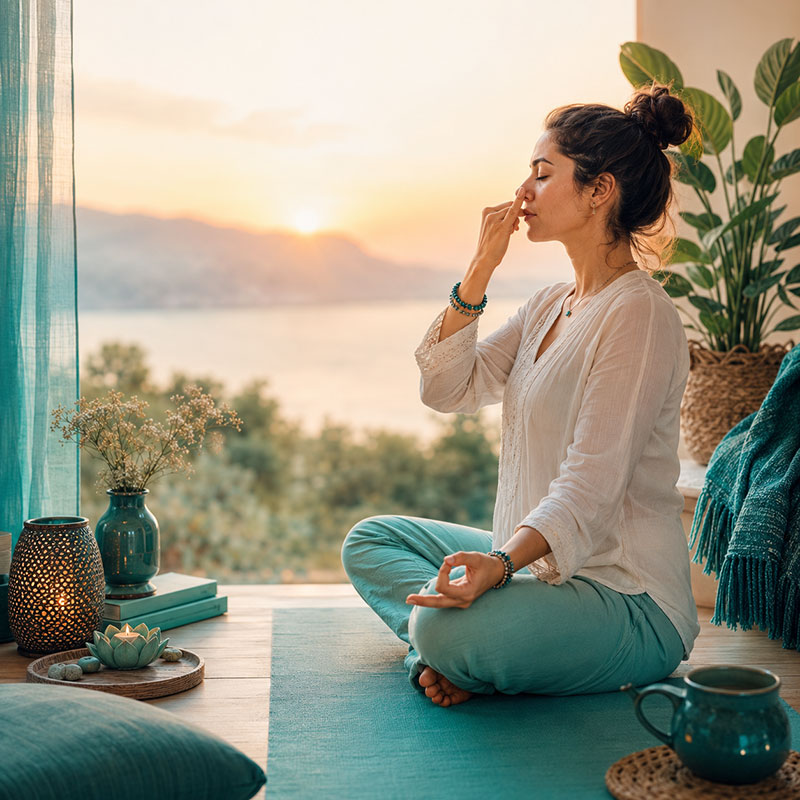
Anuloma Viloma, also known as alternate nostril breathing, is a gentle pranayama technique traditionally used to create greater balance between the body, breath and mind.
It can be practised during stressful periods, after an emotionally demanding conversation, at the end of a busy working day or as part of a calming evening routine.
By slowing down and alternating the flow of breath through the nostrils, we create a conscious pause between external events and our internal response to them.
Review the Safety Information First
Before practising any pranayama technique described in Ebru Şinik’s breathing guide, it is important to review the specific application instructions and contraindications.
Different breathing techniques may create different physiological effects. A gentle slow-breathing practice should not be considered equivalent to forceful exhalation, rapid breathing or prolonged breath retention.
Watching the application video before your first practice can help you understand the hand position, nostril sequence, sitting posture and rhythm more clearly.
Bringing the Nervous System Back into Balance
We are exposed to many small and large stressors throughout the day: deadlines, difficult conversations, constant notifications, uncertainty and the pressure to respond quickly.
Even when the stressful event has ended, the nervous system may continue to behave as though the pressure is still present.
A short alternate nostril breathing practice can create a transition between work and personal life, between emotional intensity and conscious response, or between daytime activity and evening rest.
What Is Alternate Nostril Breathing?
Anuloma Viloma is a pranayama technique in which the breath is directed alternately through the left and right nostrils.
One nostril is gently closed while inhaling or exhaling through the other. The sequence then changes sides in a slow and controlled rhythm.
The practice should remain quiet, smooth and comfortable. There is no need to inhale the maximum possible amount of air or to create pressure inside the nose, chest or head.
Position
Sit upright and comfortably on the floor or on a firm chair.
Duration
Begin with three minutes and gradually progress without exceeding ten minutes.
Frequency
Practise once daily or use a short session when you need to pause and reset.
Children
Children should practise only with appropriate adult guidance and supervision.
What May Alternate Nostril Breathing Support?
Individual experiences vary. When practised gently and consistently, alternate nostril breathing may support several areas related to nervous system regulation and daily wellbeing.
Stress Regulation
The steady rhythm of the practice may help interrupt an escalating stress response and create a greater sense of calm.
Preparation for Sleep
A gentle evening practice may help settle racing thoughts and support the transition from daytime activity towards rest.
Attention and Concentration
Following the alternating sequence requires gentle attention and may help bring a distracted mind back to the present moment.
Emotional Regulation
Pausing to regulate the breath may help create space around anger, sadness, fear or emotional tension.
Work–Life Transition
A short session at the end of the working day can create a conscious boundary between professional responsibilities and personal life.
Breath Awareness
The exercise may increase awareness of breathing rhythm, unnecessary tension and habitual shallow breathing.
Conditions That Require Medical Guidance
Do not begin the practice during active chest pain, severe breathing difficulty, faintness or another acute medical symptom.
Anyone with uncontrolled high blood pressure, epilepsy or a recent seizure, a serious cardiac or respiratory condition, or another significant medical diagnosis should consult their physician before practising.
Taking medication does not automatically make a breathing exercise appropriate. Individual medical assessment should always take priority.
A Note for People with Asthma
Gentle breathing awareness may help some people develop a calmer and more conscious relationship with their breath.
However, alternate nostril breathing does not replace asthma medication, medical monitoring or an individual treatment plan.
Do not practise during an asthma attack or whenever breathing feels restricted. Seek guidance from your physician before introducing a new breathing routine.
Prepare Your Posture and Right Hand
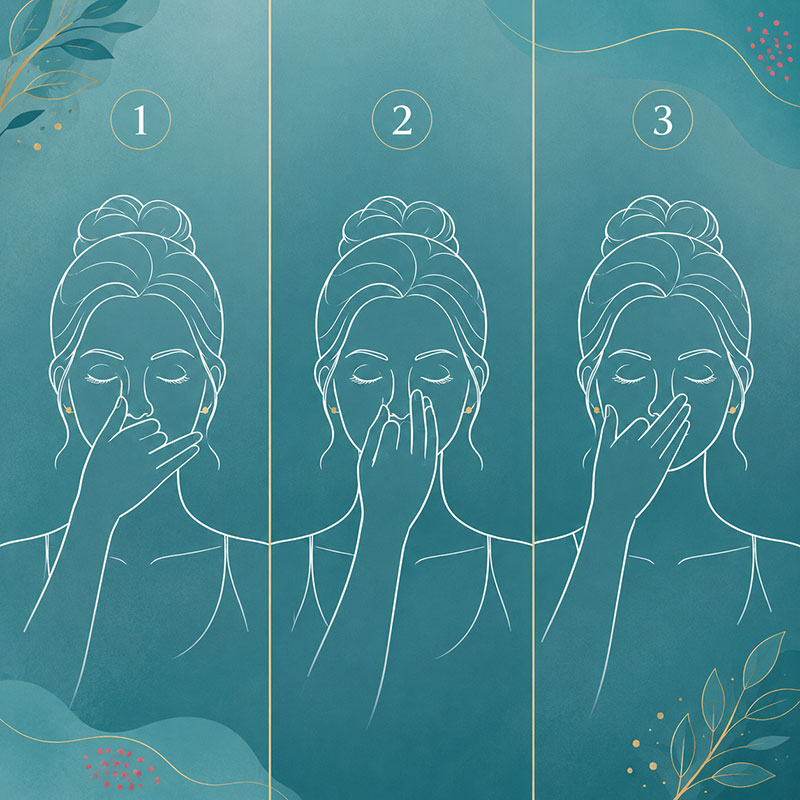
Sit upright without making the spine rigid. Relax the shoulders, neck, forehead and jaw.
Place the right index and middle fingers gently between the eyebrows or fold them comfortably towards the palm.
Use the right thumb to close the right nostril and the ring finger to close the left nostril. The touch should remain light and should not distort the nose.
How to Practise Anuloma Viloma
Prepare the Breath
Keep the mouth gently closed. Rest the tip of the tongue comfortably behind the upper front teeth without pressing.
Close the Right Nostril
Gently close the right nostril with the right thumb and slowly exhale through the left nostril.
Inhale Through the Left
After completing the exhalation, inhale gently and comfortably through the left nostril.
Change Sides
Close the left nostril with the ring finger, release the right nostril and exhale slowly through the right.
Inhale Through the Right
When the exhalation is complete, inhale through the right nostril without forcing the breath.
Return to the Left
Close the right nostril with the thumb, release the left nostril and exhale gently through the left.
Start with a Natural and Comfortable Rhythm
If you are practising alternate nostril breathing for the first time, allow inhalation and exhalation to remain approximately equal.
As the practice becomes familiar, the exhalation may naturally become longer than the inhalation. A gentle progression towards a 1:2 ratio may be used only when it remains completely comfortable.
Do not count so intensely that the exercise itself creates pressure. A smooth, relaxed breath is more important than achieving a mathematical ratio.
Remember the Alternating Pattern
Exhale left · Inhale left · Exhale right · Inhale right · Exhale left
Continue changing the closed nostril after each inhalation. In this version of the practice, begin on the left side and complete the final exhalation through the left nostril.
How to Complete the Practice
After your final exhalation through the left nostril, lower the right hand gently onto the knee.
Keep the eyes softly closed and allow the breath to return to its natural rhythm.
Rest quietly for a short time and observe how the body, mind and breathing pattern feel before opening the eyes or standing up.
A Four-Week Practice Plan
Week One
Begin with three minutes once a day. Remain at this level whenever needed.
Week Two
Increase to five minutes only when the three-minute practice feels effortless.
Week Three
Progress to approximately seven minutes while maintaining a quiet natural rhythm.
Week Four
Increase to nine minutes if desired. Do not exceed ten minutes per session.
You do not have to increase the duration every week. Three comfortable minutes can be more valuable than ten minutes performed with strain.
When Can You Use This Practice?
After a Difficult Conversation
Use a short practice after conflict or emotional intensity before deciding how to respond.
Between Meetings
A few minutes may help clear mental residue before beginning the next task or meeting.
After Work
Create a transition ritual before entering the evening and reconnecting with personal life.
Before Sleep
Practise gently while sitting upright in bed, then return to natural breathing before lying down.
Watch the Alternate Nostril Breathing Video
Watch the complete demonstration before your first practice to observe the nostril sequence, hand placement and breathing rhythm.
Watch the Application VideoLife Hidden in Breath
Ebru Şinik’s book Life Hidden in Breath – Breathing Techniques for Daily Life, presented on its English cover as Health, Breath & Life, explains pranayama exercises step by step.
The book includes practical instructions, recommended durations, individual contraindications and QR-coded application videos.
Review the complete guidance before selecting the breathing techniques that are most appropriate for your needs and daily routine.
Discover the Breathing GuideBe Well, Be Happy!
Anuloma Viloma and Alternate Nostril Breathing
What is Anuloma Viloma?
Anuloma Viloma is a pranayama practice in which inhalation and exhalation are alternated between the left and right nostrils.
Can alternate nostril breathing help with stress?
Its slow rhythm and focused sequence may support relaxation and help create a pause during stressful or emotionally demanding periods.
Can I practise it before sleep?
A gentle session may be included in an evening routine. Practise while sitting upright, return to natural breathing and then lie down when you feel ready.
How long should beginners practise?
Begin with approximately three minutes. Increase gradually only when the practice remains completely comfortable and never exceed the recommended maximum duration.
Must the exhalation be twice as long as the inhalation?
No. Beginners may keep inhalation and exhalation approximately equal. The exhalation may gradually lengthen only when this occurs without strain or breathlessness.
Can people with high blood pressure practise?
Anyone with uncontrolled high blood pressure or a serious cardiovascular condition should obtain medical guidance before beginning a structured breathing practice.
Can alternate nostril breathing treat asthma?
No breathing exercise should be presented as a treatment for asthma. It may support breath awareness for some individuals, but it cannot replace medication or professional respiratory care.
What should I do if I feel dizzy?
Stop immediately, lower your hand and return to natural breathing. Rest until you feel completely comfortable. Do not restart the practice during the same session.
Wellbeing Note
Alternate nostril breathing may support stress management and relaxation, but individual responses and medical needs vary.
The practice does not diagnose, prevent or treat disease and should not replace medical evaluation, prescribed medication, psychological support or professional treatment.
Ebru Şinik
Wellbeing Coach & Ayurveda Instructor