
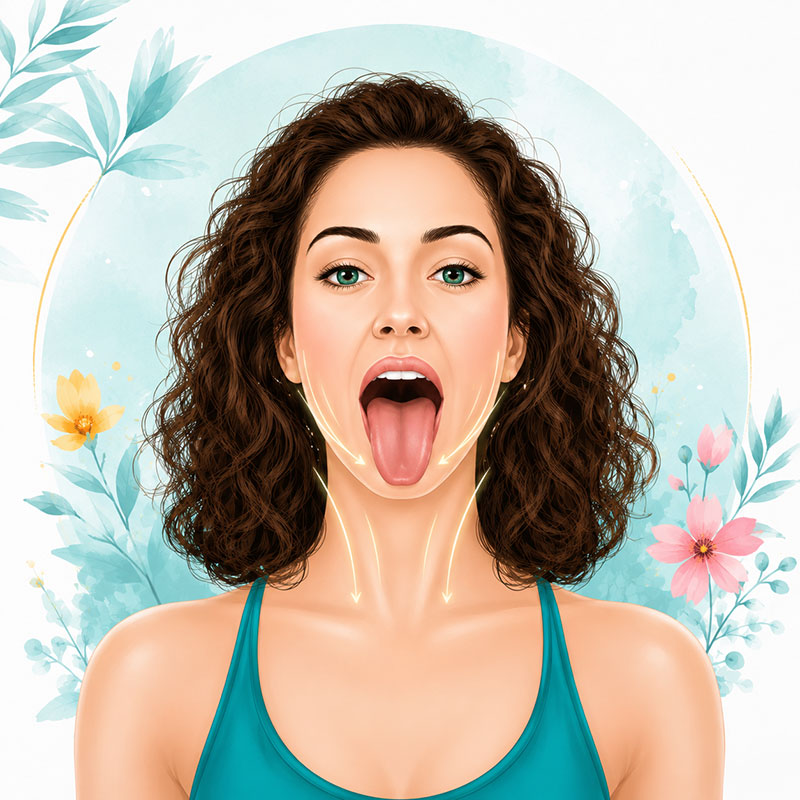
Lion’s Breath: A Breathing Technique for Expressive Release and Confidence
Lion’s Breath is an energising and playful breathing practice in which the tongue is extended and the breath is released through the mouth with a strong “HAAA” sound.
It may support emotional release, vocal expression, courage in moments of tension, and greater awareness of the jaw, face, neck and throat area.
Lion’s Breath is not a quiet inward practice. It is a bold and expressive exhalation designed to release tension and invite freedom into the face, jaw, throat and voice.
Read the Practice Guidance First
Before practising the pranayama techniques described by Ebru Şinik in Hidden Life in Breath, review the practice guidance carefully and watch the application video before your first attempt.
Lion’s Breath is simple and accessible, but it should still be practised mindfully and without force.
Stop immediately if the practice causes pain, dizziness, throat irritation, jaw discomfort, shortness of breath or a feeling of strain.
A Bold Exhalation Practice
Lion’s Breath is a traditional yogic breathing exercise in which you inhale through the nose and exhale through the mouth while opening the mouth wide, extending the tongue and making a strong “HAAA” sound.
The movement and sound create a very different experience from quiet pranayama techniques. Rather than inward silence, this practice emphasises release, expression and energy.
Because the practice engages the face, jaw, tongue, throat and neck, it is often perceived as refreshing, expressive and mentally clearing.
Basic Guidelines
Posture
It may be practised sitting on the floor, sitting on a chair or standing upright.
Children
Children of many ages may practise it gently, especially as a playful supervised exercise.
Breath Count
Start with 3 breaths and gradually increase up to 7 if comfortable.
Frequency
One session during the day is generally enough within this method.
Practise Gently and With Awareness
Lion’s Breath is generally a simple and accessible practice, but “simple” does not mean forceful.
- Avoid strong or exaggerated practice if you have an acute throat infection, jaw pain, severe temporomandibular joint discomfort, or recent oral or throat surgery.
- If you feel dizzy, irritated in the throat, or emotionally overwhelmed, stop and rest.
- Children should practise in a playful, light and supervised way, never with strain.
What May Lion’s Breath Support?
Lion’s Breath should be understood as a supportive wellbeing practice rather than a medical treatment.
Face and Neck Awareness
The exaggerated tongue and facial movement may help activate and mobilise muscles in the face, jaw and front of the neck.
Release of Built-Up Tension
It may help release tension held in the jaw, throat, chest and facial muscles.
Expressive Confidence
The practice may support vocal expression, courage and a greater willingness to use your voice clearly.
Emotional Release
It may feel relieving in moments of internal pressure, frustration, hesitation or suppressed expression.
Voice Activation
The open-mouth exhalation may help awaken the voice and increase awareness of sound and expression.
Playful Courage
Especially when taught to children in a playful way, it may support confidence and reduce performance tension.
Lion’s Breath is sometimes described as creating a “natural botox effect” because it activates the face, jaw and neck area. This should be understood as a wellness expression, not as a medical or cosmetic treatment claim.
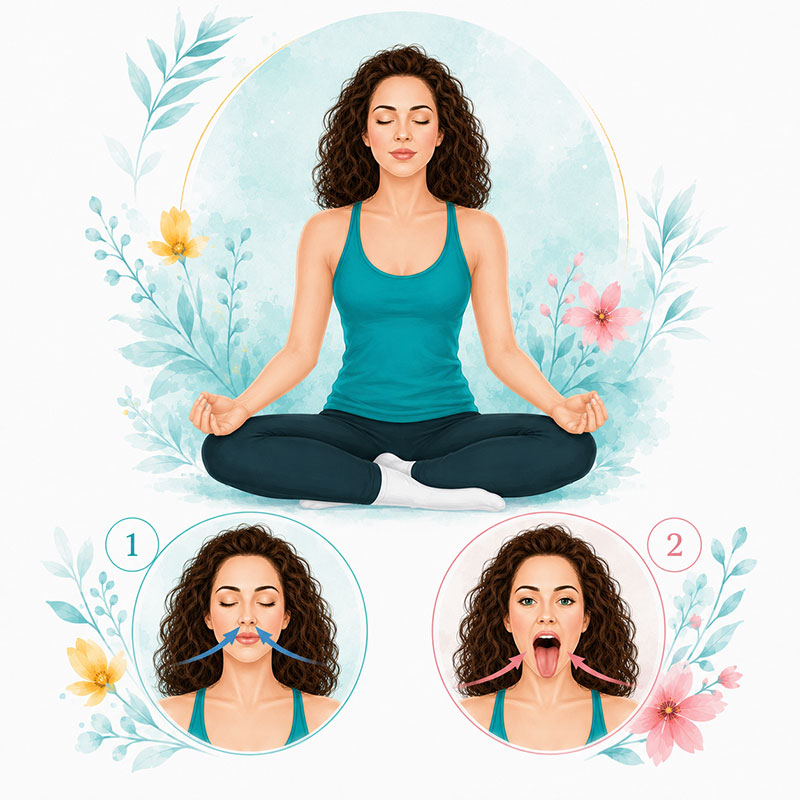
How to Practise Lion’s Breath
- Sit comfortably on the floor, on a chair, or stand upright.
- Lengthen the spine and allow the shoulders to relax.
- Inhale through the nose.
- Open the mouth wide and extend the tongue out comfortably.
- Exhale strongly through the mouth while making a clear “HAAA” sound.
- Relax the face after the exhalation and return to a neutral expression.
- Repeat for 3 breaths at the beginning.
- If comfortable, increase gradually up to a maximum of 7 breaths.
A Practice for Expression and Inner Permission
Lion’s Breath may feel especially supportive for people who hold tension in the throat, have difficulty expressing themselves clearly, or feel hesitant about using their voice.
In a symbolic sense, the practice may help some individuals feel bolder, more expressive and more connected to the act of speaking honestly.
This is not because the breath “removes blocked emotions” in a medical sense, but because expressive movement and sound can sometimes create a sense of release.
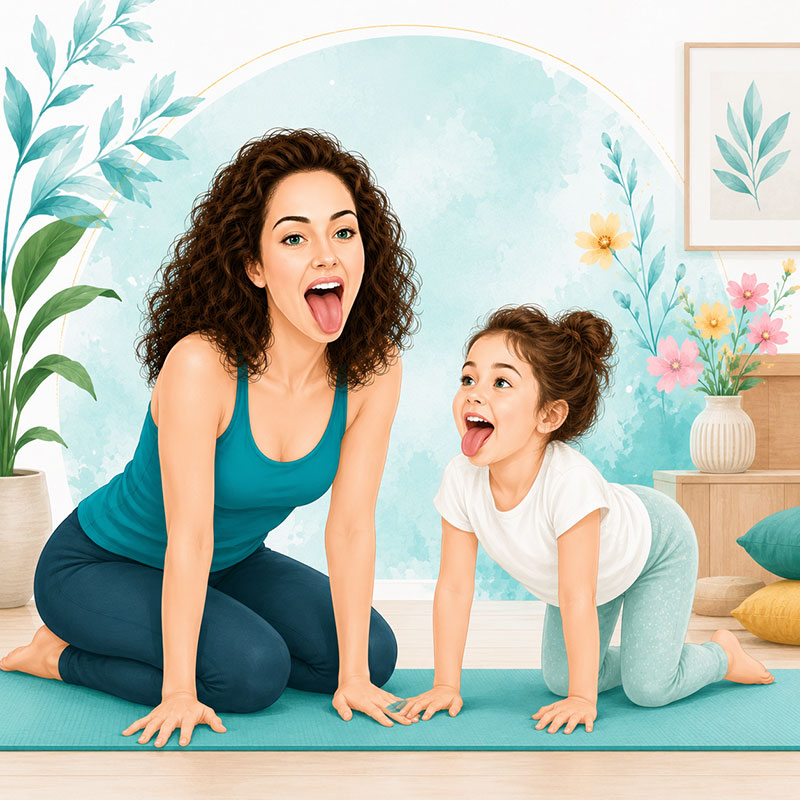
Lion’s Breath Can Be Taught as a Game
For children who feel shy, fearful or low in confidence, Lion’s Breath can be introduced as a playful exercise.
It may be practised while sitting, standing, or even in a playful “lion pose” on hands and knees.
Keep the experience light, brief and fun. Children should never be pushed to perform strongly or loudly if they feel uncomfortable.
Keep the Practice Short and Comfortable
Beginner Level
Start with 3 breaths and observe how your jaw, throat and energy respond.
If Comfortable
Gradually increase to 5 breaths and later up to 7 if the practice remains easy.
Upper Limit
Do not exceed 7 breaths in one practice session within this method.
Watch the Lion’s Breath Practice Video
Watch the video in which Ebru Şinik explains how to practise Lion’s Breath Pranayama correctly within an Ayurvedic preventive wellbeing approach.
Watch the Practice VideoHidden Life in Breath
Ebru Şinik’s breathing guide introduces pranayama practices with detailed explanations, durations and technique-specific notes.
If you would like to explore breathing techniques in a more structured way, the book offers broader guidance and practical support.
Discover the BookSometimes a strong and honest exhalation is exactly what the body needs.
Be Well, Be Happy!
Lion’s Breath
What is Lion’s Breath?
Lion’s Breath is a yogic breathing technique in which you inhale through the nose and exhale through the mouth with the tongue extended and a “HAAA” sound.
What is Lion’s Breath used for?
It may support expressive release, vocal confidence, awareness of the face-neck-throat area, and the release of built-up tension.
Does Lion’s Breath really have a natural botox effect?
This is a wellness-style expression. The practice may activate facial and neck muscles, but it is not a substitute for cosmetic or medical treatment.
How many breaths should beginners practise?
Beginners may start with 3 breaths and gradually increase up to 7 if the practice remains comfortable.
Can children practise Lion’s Breath?
Yes, in a playful and gentle way with supervision. It can be introduced as a fun confidence-building exercise.
Can Lion’s Breath help with confidence?
Some people experience it as a confidence-supportive practice because it encourages sound, expression and a more open physical posture.
What should I do if my throat or jaw feels uncomfortable?
Stop immediately, relax the face and return to normal breathing. The practice should never feel painful or forced.
Wellbeing Note
Lion’s Breath may support expressive release, vocal awareness, playful confidence and the release of tension in the face and throat.
It does not diagnose, prevent or treat headaches, anxiety disorders, speech disorders, trauma, depression or another medical or psychological condition.
Ebru Şinik
Wellbeing Coach & Ayurveda Instructor