
The Importance of Ayurvedic Spices
According to Ayurveda, food is not only a source of energy. It is one of the most important foundations of balance, vitality and preventive wellbeing.
Spices are used to enliven food, stimulate the senses and support the body’s ability to digest and benefit from each meal.
Ayurveda teaches that health depends not only on what we eat, but also on how well we digest, absorb and transform what we eat.
The Role of Food in Ayurveda
Ayurveda considers appropriate nutrition one of the essential elements of maintaining health and balance.
A nourishing meal should be selected according to the individual’s constitution, current state of balance, digestive capacity, age, season and lifestyle.
The quality of the ingredients is important, but so are the quantity consumed, the combination of foods, the time of the meal and the emotional state in which it is eaten.
Even nutritious foods may create discomfort when they are consumed in unsuitable combinations, excessive amounts or at a time when the digestive system is not ready to process them.
Agni: The Ayurvedic Concept of Digestive Fire
In Ayurveda, the metabolic and digestive intelligence of the body is described as Agni, or digestive fire.
Agni represents the body’s ability to break down food, absorb nutrients and transform sensory and emotional experiences.
Ayurvedic spices are traditionally used to support this digestive process and to make meals more suitable for the individual, season and time of day.
Why Are Spices Important in Ayurvedic Cooking?
Supporting Digestion
Spices are traditionally selected to awaken digestion and help the body process different ingredients more comfortably.
Balancing a Meal
A warming, cooling, drying or moistening spice may be chosen to balance the qualities of a particular food.
Stimulating the Senses
The colours and aromas of spices activate the senses before the first bite and prepare the body for the experience of eating.
Creating Satisfaction
A meal containing a balanced variety of tastes can feel more satisfying and may reduce the desire to continue eating.
Taste Is Also Information
Ayurveda describes six primary tastes: sweet, sour, salty, pungent, bitter and astringent.
Each taste has different qualities and creates a different effect on the body and mind. Spices allow us to introduce these tastes into meals in small but meaningful amounts.
The aim is not to make every dish intensely spicy. The aim is to use flavour intelligently so that food becomes both enjoyable and easier to digest.
General Tips for Using Ayurvedic Spices
Begin with Less
Most spices are potent. Begin with a small amount and gradually adjust the flavour.
Learn Their Qualities
Notice whether a spice is warming, cooling, sharp, drying or soothing.
Consider the Individual
The same spice blend may not be suitable in the same amount for every constitution.
Observe the Response
Pay attention to digestion, comfort, temperature and energy after the meal.

The Magic of the Ayurvedic Spice Box
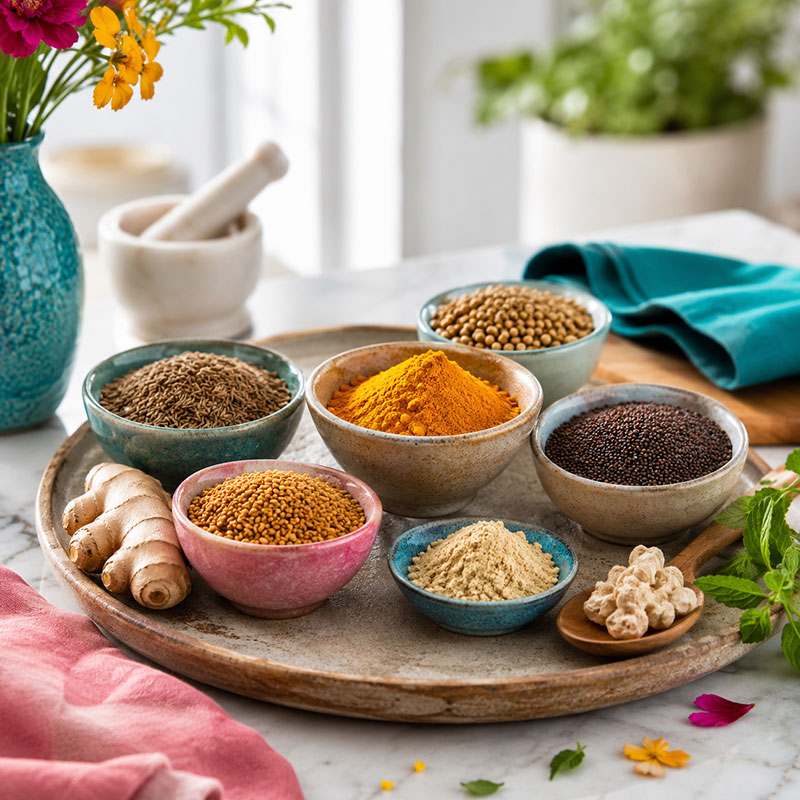
The traditional Indian spice box brings together a small selection of spices that can be combined in different ways according to the food, season and individual need.
The colours, aromas and flavours awaken the senses, enrich simple ingredients and create countless variations from the same basic foods.
A commonly used seven-spice collection may include cumin, turmeric, mustard seeds, coriander, fenugreek, asafoetida and dried ginger.
Traditional Qualities and Culinary Uses
Cumin Seeds
Traditional taste: Bitter and pungent
Cumin is commonly used with vegetables, legumes and grains. It adds an earthy aroma and is traditionally valued for digestive support.
Turmeric
Traditional tastes: Bitter, pungent and astringent
Turmeric gives food its rich golden colour and is traditionally used in vegetable, rice, lentil and soup recipes.
Mustard Seeds
Traditional taste: Pungent
Mustard seeds release a strong nutty aroma when gently heated in oil or ghee. A small quantity is generally sufficient.
Coriander
Traditional qualities: Mild and cooling
Coriander seeds have a light citrus-like aroma and may help balance stronger or more heating spices in a recipe.
Fenugreek Seeds
Traditional tastes: Bitter and astringent
Fenugreek has a distinctive bitter flavour. It should be used sparingly and is often combined with legumes and vegetables.
Asafoetida
Traditional taste: Strong and pungent
Asafoetida has an intense aroma in its raw form. A very small amount is traditionally added to legumes and gas-forming foods.
Dried Ginger
Traditional tastes: Pungent with subtle sweet qualities
Dried ginger is more concentrated and heating than fresh ginger. It is commonly used in warming spice blends, soups and teas.
How to Release the Aroma of Whole Spices
Whole spices such as cumin, coriander and mustard seeds are often gently heated in a small amount of oil or ghee at the beginning of cooking.
This process releases their aroma and allows their flavours to blend more evenly throughout the dish.
The heat should remain controlled. Spices that burn may become excessively bitter and overpower the meal.
Should Everyone Use the Same Spice Blend?
The seven spices can be included in many styles of Ayurvedic cooking, but the amount and combination should be adjusted according to the individual.
A person with a strong sensitivity to heat may require less mustard, dried ginger or asafoetida, while someone who frequently feels cold may prefer a warmer blend.
Ayurveda is an individualised system. The purpose is not to follow a universal formula, but to observe how food and spices affect your own digestion and wellbeing.
Spices should not hide the natural character of food. Used consciously, they help reveal its aroma, support digestion and bring balance to the whole meal.
Be Well, Be Happy!
Ayurvedic Spices and Digestive Balance
Why are spices important in Ayurveda?
Ayurvedic cooking uses spices to add flavour, stimulate the senses, balance the qualities of food and traditionally support digestion and Agni.
What is Agni?
Agni is the Ayurvedic term for digestive and metabolic fire. It describes the body’s ability to process food, absorb nutrients and transform experience.
What are the seven Ayurvedic cooking spices?
A traditional seven-spice collection may include cumin, turmeric, mustard seeds, coriander, fenugreek, asafoetida and dried ginger.
Are Ayurvedic spices suitable for every Dosha?
Many spices can be used for different constitutions, but the quantity and combination should be adjusted according to the individual, season and current state of balance.
How much spice should be added to a meal?
Most spices are concentrated, so begin with a small amount. The aroma and flavour should support the meal rather than overpower it.
Are all Ayurvedic spices heating?
No. Mustard, dried ginger and asafoetida are generally considered heating, while coriander is traditionally regarded as milder and cooling.
Can spices replace medical treatment?
No. Culinary spices may support a balanced diet, but they do not replace medical diagnosis, prescribed treatment or advice from a qualified health professional.
Wellbeing Note
Culinary amounts of spices are generally different from concentrated extracts, supplements and therapeutic preparations.
Anyone who is pregnant, uses regular medication, has a chronic medical condition or experiences digestive sensitivity should consult a qualified healthcare professional before using concentrated spice preparations.
Reference
This article was developed with reference to Ayurveda: A Quick Reference Handbook by Dr. Manisha Kshirsagar and Ana Cristina R. Magno, together with Ebru Şinik’s holistic wellbeing approach.
Ebru Şinik
Wellbeing Coach & Ayurveda Instructor